.jpg)
Tribe · Wazir
Darwesh Khel
The Darwesh Khel are the Wazir of North Waziristan, Wana and the Bannu border, descended from Musa Darwesh. The Imperial Gazetteer divides them into two main sections, the Utmanzai and Ahmadzai.
Read article16 Oct 2026
Confederation
وزیر
The Wazir hold Waziristan, from Shawal and Birmal to Wana, the Tochi and the Kurram border. Bellew divides them into the Khizari and the Laili, with the Khizari split into the Musa (Darwesh Khel), Mahsud and Gurbuz. The Imperial Gazetteer gives the Mahsud pedigree as Mahsud, son of Mahmud, son of Khizri, son of Wazir.
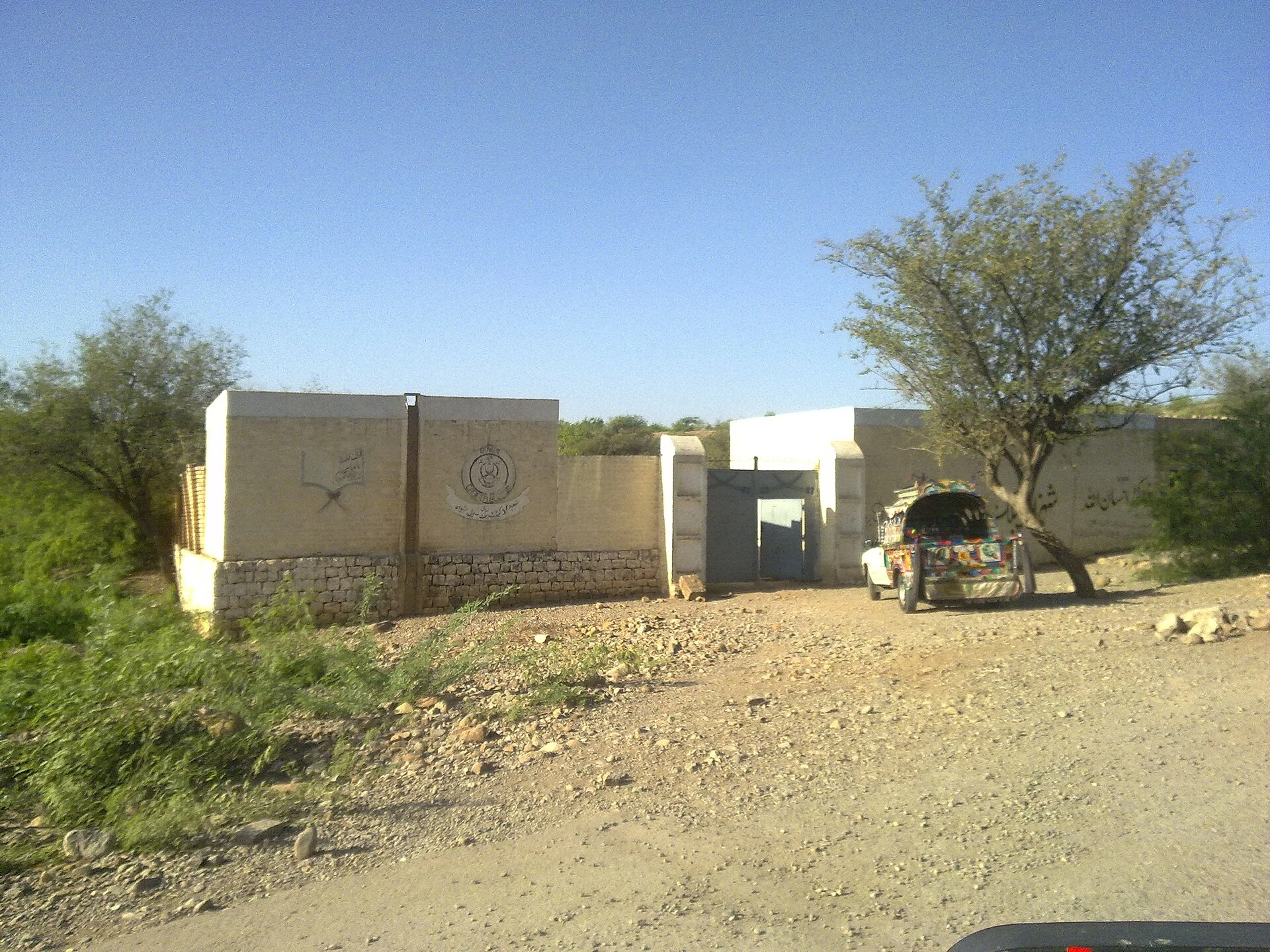
The road from Thal to Mir Ali and Miranshah at Shewa, North Waziristan, in May 2012.
Rizwan Ullah Wazir · CC BY 3.0
Gallery
4 images
The main bazaar of Datta Khel in the upper Tochi valley, September 2013.
Alexandra post on the road into the Razmak valley, built during British rule, photographed in December 2013.
Tochi Scouts on picquet duty during the operations against the Faqir of Ipi in the 1930s.
Wana and the Afghan border on a 1:500,000 aeronautical chart, 2001.
The Khulasat al-Ansab, Raverty, Rose and Caroe trace the Wazir to Sulaiman son of Kakai. Longworth Dames says the Wazir are not included in any of the genealogies and notes their absence from the Makhzan-i Afghani.
The Khulasat al-Ansab, Raverty, Rose's Glossary and Caroe trace the Wazir to Sulaiman son of Kakai, in the Karlanri line. Longworth Dames disagreed: he wrote that the Wazir are not included in any of the genealogies and noted that the Makhzan-i Afghani does not mention them. A Wazir tradition recorded in the Glossary tells of Abdullah, a childless chief of the Urmur, who found a baby hidden under a frying pan (karahai) where a king's army had camped on the Wana plain. The foundling married an Urmur girl, and his grandson was Wazir.
Sulaiman's son Lalai fled after a blood feud to Nangarhar, where his descendants, the Laili Wazir, live on the north slopes of the Safed Koh between Jalalabad and Parachinar; Bellew calls them entirely distinct from the Wazir proper. The other son, Khizrai, had three sons: Musa, called Darwesh for his piety, ancestor of the Darwesh Khel; Mahsud, ancestor of the Mahsud; and a third whose son Gurbuz gave his name to the Gurbuz. The Darwesh Khel are divided into the Utmanzai in the north and the Ahmadzai in the south.1,2,3,4,6,7,9
The original seat of the tribe was in the Birmal hills west of the Khost range. About the close of the fourteenth century the Wazir moved east: they drove the Bannuchi out of Shawal, occupied the hills north of the Tochi, then crossed the river, pushed the Urmur out of the hills on the Bannu and Tank border to Logar near Kabul, and drove the Bitanni from Kaniguram. From the hills round Shuidar they spread south to the Gomal. The Darwesh Khel kept to the hills for about 350 years; in the second half of the eighteenth century they began to come down onto the Marwat and Bannuchi plains in winter, and in the disorder of early Sikh rule in Bannu they settled there for good.
Babur recorded that the Wazir Afghans had been irregular with their taxes and brought him 300 sheep as tribute. Elphinstone, who never met a Wazir himself, reported from travellers that they had no common government, lived in small communities, some under khans and some without, and fought little among themselves. Most lived in black tents or mat huts and moved up to the high mountains in spring; near Kaniguram some lived in caves cut in the rock. Their country had iron ore, which they made into arms.5,6,8,9
In 1859 the Turi joined a British expedition against the Kabul Khel Wazirs of the Kurram border. Under the agreement of 1893 with the amir of Afghanistan the boundary through Waziristan was demarcated in 1894–95. In 1894 the Ahmadzai Darwesh Khel of Wana invited the British to occupy their country, and Wana became a British post; in 1896 Southern Waziristan became a political agency with its headquarters there. On 10 June 1897 the Madda Khel of Maizar attacked the escort of a political officer and killed several British officers and sepoys, and a punitive force laid their lands waste. In November 1902 columns from the Tochi, Bannu and Thal entered the Kabul Khel country, blew up its towers and received the surrender of about 250 outlaws.
After the Third Anglo-Afghan War of 1919 the Tochi Wazirs accepted the government's terms at a jirga on 17 November 1919, while Ahmadzai from Wana fought beside the Mahsud against the British advance. Razmak was occupied after negotiation with the Utmanzai. In 1929 Wazir and Mahsud lashkars helped Nadir Khan take Kabul and become king, and in 1933 a lashkar of both tribes crossed the Durand Line and besieged Matun in Khost.5,9,11
In 1936 a Tori Khel mullah, Mirza Ali Khan, known as the Faqir of Ipi after a village in the Tochi valley, raised a lashkar in April 1936 over the case of a Hindu girl, Islam Bibi, who had married a Muslim, and preached against the government over the case and over the Shahidganj mosque in Lahore. When troops marched through the Khaisora valley on 25 November 1936 they were opposed. Fighting continued into 1937: the Faqir made Arsal Kot in the Shaktu valley his headquarters, the army occupied it between April and June 1937, and the Faqir escaped. The Tori Khel, a section of the Utmanzai, were granted a suspension of hostilities on 5 June 1937. The Faqir was never captured and died in the 1960s.
The Imperial Gazetteer notes the Wazirs' broad dialect of Pashto, studied in J. G. Lorimer's Grammar and Vocabulary of Waziri Pashto (1902), and describes them as intensely democratic: any man could rise to be a malik, and maliks had little authority. North and South Waziristan were tribal agencies of the Federally Administered Tribal Areas until the Twenty-fifth Amendment of 31 May 2018 merged the tribal areas into Khyber Pakhtunkhwa.5,10,11,12
Mirza Ali Khan, the Faqir of Ipiactive 1936–1947; died in the 1960s
Tori Khel Utmanzai Wazir mullah who led the rising of 1936–37 in North Waziristan and was never captured by the British.10
Tribe · Wazir
The Darwesh Khel are the Wazir of North Waziristan, Wana and the Bannu border, descended from Musa Darwesh. The Imperial Gazetteer divides them into two main sections, the Utmanzai and Ahmadzai.
Tribe · Wazir
The Gurbuz are a Wazir tribe west of the Khost range and north of the Dawar. Bellew gives two sections, Nasiri and Khari, and Caroe names their ancestor Mubarik.
Tribe · Wazir
The Mahsud hold central and South Waziristan around Kaniguram and Makin. They claim descent from Mahsud, son of Mahmud, son of Khizri, son of Wazir, and the Imperial Gazetteer gives three branches, Alizai, Shaman Khel and Bahlolzai.
The genealogy follows the Makhzan-i Afghani and the Khulasat al-Ansab, as Caroe tabulates them. It records tradition: where sources place a tribe differently, the note above says so.