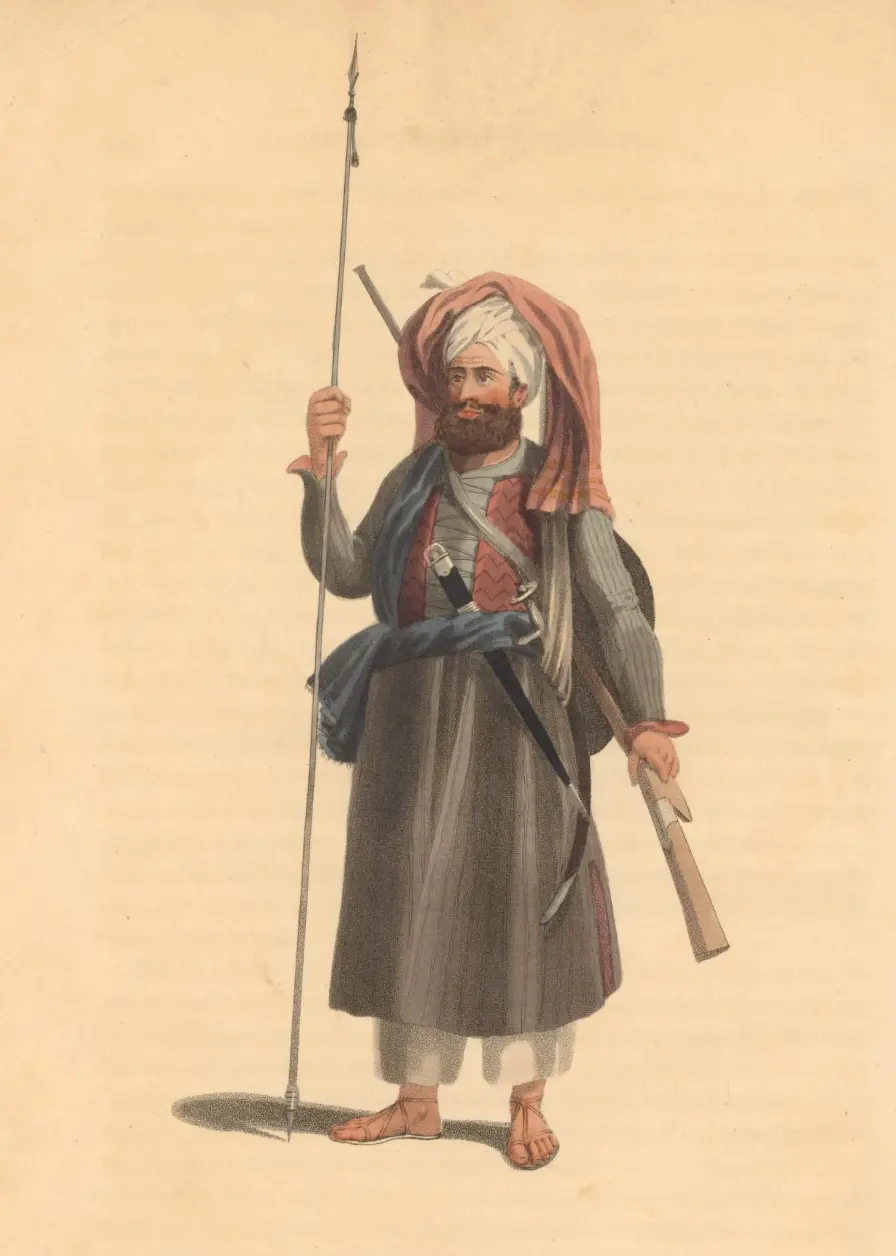
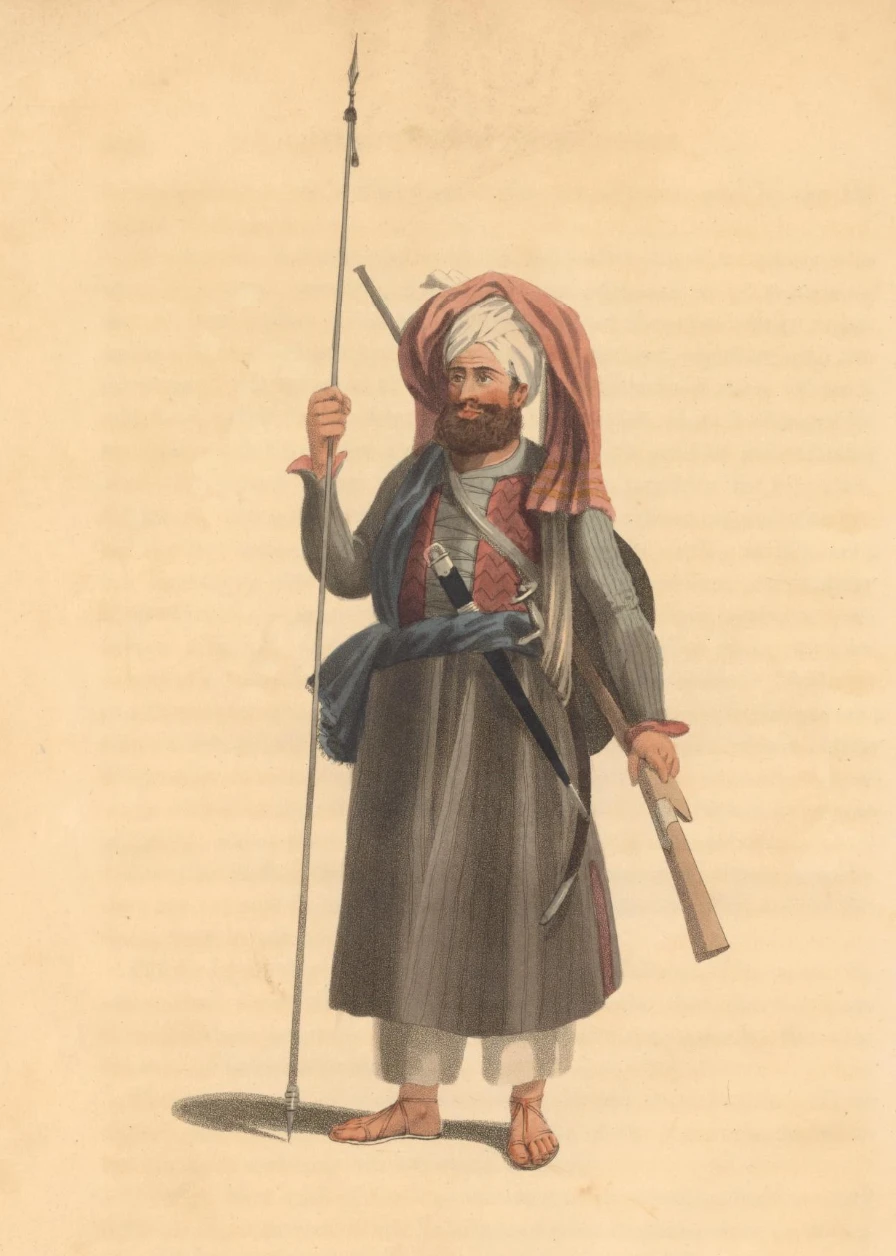
The Yusufzai (یوسفزی) hold the north of the Peshawar valley and the hills beyond it. When Mountstuart Elphinstone was in Peshawar in 1809, the north of the plain was theirs, and so were the hill valleys of Buner, Swat and Panjkora; some sections lived east of the Indus. [3] The Imperial Gazetteer of 1908 added Dir and the Bashkar valley, and noted that the Pashtuns themselves used the name Yusufzai only for Dir, Swat and Buner, with the Chamla valley; in British usage it was also the name of the subdivision formed by the Mardan and Swabi tahsils. [7] That plain, the Samah (Yusufzai Samah), was a dry waste until canals turned it into corn-land and cane-fields. [1]
Olaf Caroe wrote that a Yusufzai asked who he is will answer "I am an Afghan", not "I am a Pakhtun", and that the Yusufzai, with the Khalil, Mohmand and Muhammadzai of Peshawar, consider themselves the truest Afghans. [1] Their speech is the hard northern Pashto, Pakhto. The Imperial Gazetteer called the Yusufzai dialect the classical one, in which the earliest Pashto books were written, and "the purest and clearest form of the language". [7] On the dialects see Pashto dialects.
Descent and branches
The tribal genealogies make the Yusufzai sons of Kharshbun, son of Sarbanr. The Peshawar District Gazetteer of 1897–98 sets out the line: Kharshbun's son Kand had two sons, Ibrahim Ghori, ancestor of the Khalil, Mohmand and Daudzai (the Ghoriah Khel), and Khakhai. Khakhai's son Mak was the ancestor of the Gigiani of the Doaba; his other son Mand had two sons, Yusuf and Umar. The Yusufzai proper descend from Yusuf; the Mandanr descend from Umar's son Mandan. [8] Together with the Gigiani, Tarklanri and Muhammadzai they are the "Khakhay" tribes of the chronicles. [1]
Elphinstone was told that the Yusuf branch took Swat, Panjkora and Buner, and the Mandanr the plain north of the Kabul river with the Chamla valley. He divided the Yusuf into three clans: the Akozai, who took Swat and Panjkora, and two more who took Buner, whose names he spelt "Moollezyes" and "Lawezyes". [6] The Akozai of Swat were reckoned at about 150,000 people in 1908. Their clans, as the Imperial Gazetteer lists them: [7]
Left bank of the Swat river: the Ranizai and Khan Khel in Lower Swat; the Sulizai and Babuzai in Upper Swat. All except the Ranizai are called the Baizai.
Right bank: the Shamizai, Sebujni, Nikbi Khel and Shamozai in Upper Swat; the Adinzai, Abazai and Khadakzai in Lower Swat. All except the Abazai and Khadakzai are called the Khwazozai.
The Mandanr of the plain are divided into the Usmanzai, the Utmanzai and the Razzar. The Razzar include the descendants of three of Mandan's four sons, Razzar, Mahmud and Khizzar; the fourth, Manno, was the father of Utman and Usman, whose descendants hold the eastern corner of the plain. [8] In the Mardan plain, Swabi is the chief village of the Utman tappa and Kalu Khan of the Razzar tappa, whose people are all descendants of Mandan; Mardan and Hoti lie in the Kamalzai tappa. [7]
Fredrik Barth's fieldwork in Swat in 1954 shows how fine the segments run. The Babuzai, the most important group in the valley, controlled an area of some 50,000 people, of whom only about 1,000 were adult Babuzai men. They were divided into the Bami Khel, Aka-Maruf Khel, Aba Khel and Barat Khel, and each of these into lines of brothers and first cousins. [2] Elphinstone, a century and a half earlier, collected the names of at least thirty independent Yusufzai communities and guessed there were more. [6]
From Kabul to the Peshawar valley
The Yusufzai histories, as Caroe retells them, begin near Kabul. The Khakhay tribes backed the Timurid prince Ulugh Beg, Babur's uncle, then quarrelled with him. He invited the Yusufzai maliks, about seven hundred of them, to a feast and had all but six killed. Among the dead was the leading malik, Sulaiman; among the survivors was the young Malik Ahmad, later the leader of the tribe. Caroe puts the massacre between 1480 and 1490. [1] Elphinstone's version came from a history of the Yusufzai written in a mixture of Pashto and Persian in 1184 AH (1771), which he thought consistent and largely confirmed by Babur's memoirs. [6]
The survivors went east by the Khyber to the Dilazak, then masters of the Peshawar valley, who gave them the Doaba between the Kabul and Swat rivers. Malik Ahmad, himself a Mandanr of the Razzar section, complained that the Doaba was too small for his people, and the Dilazak offered the valleys of Danish Kol and Ambahar towards Bajaur, and Hashtnagar if the Yusufzai could take it from its Dehqan landholders. [1] The Gigiani, who had sided with Ulugh Beg, followed later, and Malik Ahmad gave them the Doaba; Hashtnagar went to the Muhammadzai. [1] The Imperial Gazetteer tells the same sequence: the Khakhai entered the valley in three clans, Yusufzai, Gigiani and Muhammadzai, settled on Dilazak waste land with permission, and then turned on their hosts. After Humayun's departure in the 1550s the Khakhai and the Ghoriah Khel together drove the Dilazak across the Indus. [7]
Caroe found it hard to believe that the Yusufzai settled the dry Samah only after the irrigated Doaba and Hashtnagar, and he was struck that Babur's memoirs already show Yusufzai in Swat and the Samah by 1519. [1] He dated the decisive Yusufzai victory over the Dilazak, the battle of Katlang, to about 1525. [1]
The conquest of Swat is told by Akhund Darweza, the religious teacher whom the Imperial Gazetteer calls "the historian of the Yusufzai". [7] H. W. Bellew summarised his account: the Yusufzai sent their women and drummers with standards and tents to the foot of the easy Malakand pass, as if to force it, while the fighting men crossed by the undefended Shahkot pass. The Swatis fled to the mountains and held out for twelve years until famine forced them to submit. [9] The Imperial Gazetteer gives the Malakand as the Yusufzai way into Swat, early in the sixteenth century. [7] The people of Swat who stayed became the Yusufzai's dependants; Elphinstone found these fakirs, Swatis, Dehqans and others, more numerous than the Yusufzai themselves. [6]
Babur and Bibi Mubarika
Babur's memoirs give the first dated picture of the Yusufzai in their new country. In January 1519, when Babur stormed Bajaur, Malik Shah Mansur Yusufzai was in his camp as the tribe's envoy, watched the fall of the fort, and was sent home with a robe and written threats to his tribe. Later that month Shah Mansur brought Babur some confections so strong that Babur, after eating a third of one, could not attend his evening council. Then Babur writes: "In order to conciliate the Yūsuf-zāī horde, I had asked for a daughter of one of my well-wishers, Malik Sulaimān Shāh's son Malik Shāh Manṣūr". Soon afterwards news came that the bride, Bibi Mubarika, was on her way with the Yusufzai tribute. [10] In May the same year Shah Mansur came again with six or seven Yusufzai chiefs, and all were given robes of honour. [10]
The Imperial Gazetteer credits the marriage, with force of arms, for Babur's hold over Bajaur, the Panjkora valley and Lower Swat; Upper Swat, still under its Swati ruler Sultan Wais, submitted of its own accord. [7] Caroe adds that the Yusufzai were notoriously unwilling to give daughters outside the tribe, and retells a story told in Yusufzai hujras of how Babur first saw the girl at a spring on the Morah pass. He presents it as legend. [1]
Shaikh Malli's survey and the wesh
After Katlang, Malik Ahmad's chief mulla, Shaikh Malli, surveyed the conquered country and shared it out: the Doaba, Hashtnagar, the Samah from Hashtnagar to the Indus, and the parts of Swat, Buner and Bajaur already taken. Land given to Afghan tribesmen was called daftar; land given to sayyids and holy men was called serai. Caroe noted how the serai plots were laid between the daftar of different sections, putting a holy man on every boundary as arbitrator. [1] Caroe suggested about 1530 for the survey. Malik Ahmad's grave is near Allahdand in Swat, Shaikh Malli's at Ghorbandi; Ahmad's successor, Khan Kajju, also a Mandanr, is buried on the Badrai stream between Swabi and Maneri. [1]
At first both Yusuf and Mandanr held shares in the plain and the hills. Later the Mandanr took the plain lands of the Yusuf, and the Yusuf took the hill lands of the Mandanr, which is why the Mardan plain is called Yusufzai though Mandanr hold almost all of it. [8] [1]
The best-known part of the settlement was periodic exchange, called wesh (division). Barth recorded the tradition that Shaikh Malli divided the valley among the sub-tribes and, since no two plots are equal, ordered them to be re-allotted regularly. [2] A man owned a number of shares in his descent group's whole estate, its daftar, divided into a fixed number of equal shares (Barth gives 80, 112 and 120), not particular fields. Fields were allotted for four, five or ten years, depending on the region, and then the whole estate was re-allotted by lot. In the Nikbi Khel country about a thousand shareholders were split between two halves of the land, a side valley and the river bank, and every ten years each half moved ten to fifteen miles to the other. [2] Elphinstone described the same system, in which each khel held its land in perpetuity but its divisions exchanged their shares after a fixed number of years. [6] The new ruler of Swat ended it by enforcing permanent settlement about thirty years before Barth arrived. [2] Barth also notes that the non-Yusufzai majority of Swat took no part in the moves, and that families of holy descent held a separate rank. [2]
Pir Roshan, Akhund Darweza and the Mughals
In the second half of the sixteenth century the Yusufzai country was split by Bayazid Ansari, called by his followers Pir Roshan, and his great opponent Akhund Darweza. [7] In Akbar's time four of Bayazid's sons were defeated by Akozai Yusufzai from the Indus side, under Malik Hamza, at the village of Bara two miles north of Topi; two fled across the river to Torbela, where the Utmanzai killed them. [1]
The Mughal emperor Akbar saw the Yusufzai as the backbone of tribal resistance. He sent his general Zain Khan against the Yusufzai and Mandanr in Swat and Bajaur, and then reinforcements under his favourite, the courtier and poet Raja Birbal, and the physician Hakim Abul Fateh, neither of whom had commanded an army. [1] The army crossed into Swat and, over Zain Khan's objections, turned for home through the Karakar pass into Buner. In the passes the Yusufzai held the crests and poured arrows and stones on a column that had lost its order. Birbal and about 8,000 men were killed in 1586, and Zain Khan reached Attock with the remnant. [1]
Caroe called this the last serious attempt to subdue the northern hills before 1895. [1] The Imperial Gazetteer takes a different view: it says Zain Khan Kokaltash, after five years of fighting and fort-building, conquered the country thoroughly by 1595, and records that he built a fort on the Malakand in 1587. [7] Both agree that Akbar's power did not last. The Khattaks, loyal to the Mughals, used the war to plant villages at Lundkhwar, Jamalgarhi and Katlang, between the Yusuf and Mandanr lands. [1] The Imperial Gazetteer adds that both sides in the Baizai feud had hired Khattak and Utman Khel fighters, who ended up holding most of the valley. [7]
Khushal Khan's reproach
When Khushal Khan Khattak rose against Aurangzeb in the 1670s, he went to the Yusufzai country to bring that powerful tribe into the war. The poem he wrote at the time reproaches them. Elphinstone had it read to him and translated it: [3]
Had I known the state of the Eusofzyes, I should have preferred flying to Dumghaur.
Further on he names the tribes who did fight, and turns on the Yusufzai again:
I alone feel for the honour of our name; While the Eusofzyes are cultivating their fields at their ease.
The two tribes had been rivals since the Khattaks crossed to the north bank of the Kabul river to stop Yusufzai cattle raids and later settled in the Baizai valley. [9] [1]
Durranis, Sikhs and the Akhund of Swat
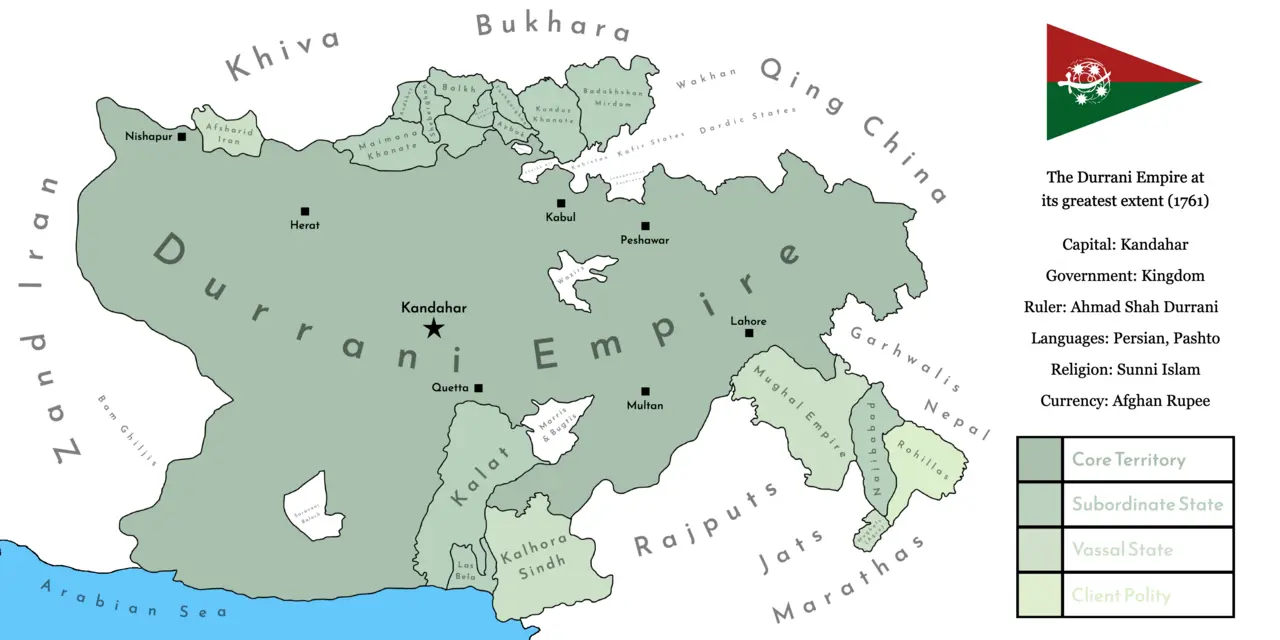
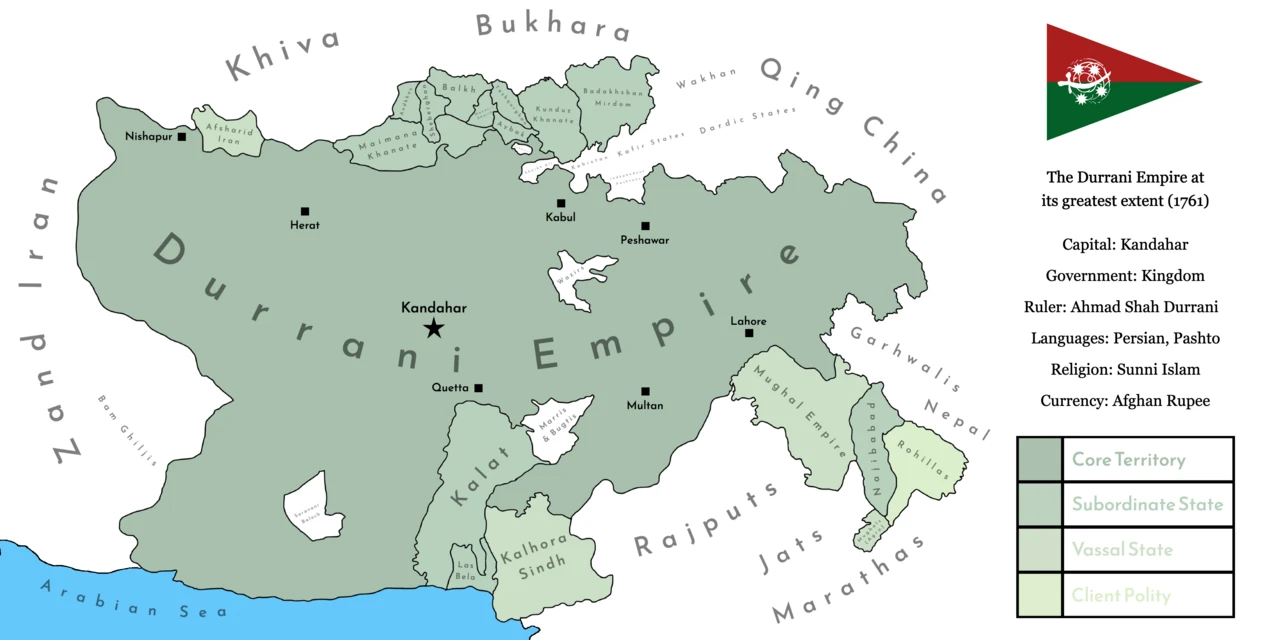
Zaman Shah's mother was a Yusufzai. In the struggle for Kabul around 1800, the Durrani who backed his half-brother Mahmud held that Yusufzai connection against him. [5] When Azim Khan marched from Kabul against the Sikhs in 1823, the Yusufzai sent a large contingent with him and were beaten at Nowshera; Ranjit Singh took Peshawar but did not push into the hills. [7] The Yusufzai had dominated Peshawar and its plain until the Sikh conquest of 1818–34. [2] In 1829 Sayyid Ahmad of Bareilly, as the Gazetteer calls him, set up a colony of Hindustani followers in the Amazai country; his strict rules turned the tribes against him and he was killed at Balakot in 1831. [7]
The Akhund of Swat, Abdul Ghafur, was born to Gujar parents, according to the Imperial Gazetteer, and began life as a herd-boy; Bellew calls him a Gandharai, or Safi. [7] [9] He lived for many years at Saidu, where he held, in the Gazetteer's words, "an irresistible influence over the Yusufzai and their neighbours". [7] Barth notes that he went to war only once, in the Ambela (Umbeyla) campaign of 1863, and afterwards acted as adviser to nearly every successful chief of his generation. He died in 1877, and his tomb at Saidu Sharif was one of the great shrines of the region. [2] His grandsons inherited part of his spiritual standing and the income of the shrine. [7] When Barth worked in Swat it was a state whose Ruler had been recognised by the Government of India in 1926, with its capital at Saidu Sharif. [2]
Numbers
The Afghans of Elphinstone's day reckoned the Yusufzai at 900,000. He thought that their country could not support more than 700,000, counting their dependants. [6] The Imperial Gazetteer's figure of about 150,000 for the Akozai of Swat alone dates from 1908. [7] The anthropology of the Swat Yusufzai rests largely on Barth's work of 1954 and Charles Lindholm's of the 1970s. [4]
دا قوم په کومه برخه کې دی
- د دې برخه
- Khakhay
- لاندې ښاخونه
- Yusufzai proper
د Yusufzai قوم پېژندنه
چېرته چې سرچینې سره توپیر لري
The Makhzan-i Afghani and Caroe make Yusuf a brother of Umar, father of the Mandanr; the Khulasat al-Ansab puts Mandar above both Omar and Yusuf. Elphinstone, Bellew and Ibbetson count the Mandanr as part of the Yusufzai.
لنډه پېژندنه
- نفوس
- about 700,000 people (1815, All Yusufzai in the wide sense (including the Mandanr) with their dependants; Elphinstone's own estimate. He gives the Afghan reckoning as 900,000, which Caroe (p. 448 n. 17) calls a copyist's error)3
- about 150,000 (1908, Akozai Yusufzai of Swat proper only (Imperial Gazetteer estimate))6
- هېوادونه
- Pakistan
- چېرته اوسېږي
- Swat District, Buner District, Upper and Lower Dir, Mardan District (Lundkhwar and Ranizai), Torghar District (Black Mountain)
- ژبه
- Pashto (northern Yusufzai dialect)
- دين
- Sunni Islam
- مهمې خېلې
- Akozai, Isazai, Iliaszai, Malizai
- نور نومونه
- Yusufzye, Eusofzye, Isapzai, Esapzai, Yusafzai
ټاټوبی
نامتو کسان
Malik Sulaimand. about 1485
Leading Yusufzai malik killed at Kabul by Ulugh Beg, in Yusufzai tradition, before the tribe moved to the Peshawar valley.7
Malik Shah Mansurfl. 1519
Yusufzai malik, cousin of Malik Ahmad, whose daughter married Babur in 1519.7
Bibi Mubarikafl. 1519
Daughter of Malik Shah Mansur and wife of Babur; Caroe thinks Babur learned much of what he knew about Afghan ways through her.7
Kasim Khan of Dirfl. about 1809
Chief of the Malizai at Dir whom Elphinstone called the most powerful Yusufzai khan of his day; he took the capital of one of the Kashkar kingdoms after crossing the snowy passes.3
Ismail Khan17th century
First of the Painda Khel Malizai line of Khans of Dir, a younger contemporary of Khushal Khan Khattak.7
Shah Jahan Khanruler of Dir in 1958
Nawab of Dir of the Painda Khel Malizai, whose forces Caroe records being sent to Kashmir.7
د Yusufzai قومونه
قوم · Yusufzai
Akozai
The Akozai descend in tradition from Akko, son of Yusuf, and hold both banks of the Swat river; the 1910 Dictionary of the Pathan Tribes calls them the Upper and Lower Swatis. Their divisions include the Ranizai, Khwajazai and Baizai.
قوم · Yusufzai
Iliaszai
The Iliaszai are the Yusufzai of western Buner, descended in tradition from Elias, son of Yusuf. They include the Salarzai and Gadaizai; the 1910 Dictionary of the Pathan Tribes also names Panjpai and Nasuzai sections.
قوم · Yusufzai
Isazai
The Isazai are the Yusufzai of the Black Mountain and Mahaban, descended in tradition from Isa, son of Yusuf. Their clans are the Hasanzai, Madakhel and Akazai.
قوم · Yusufzai
Malizai
The Malizai are the Yusufzai of eastern Buner, Dir and the Panjkora. They include the Daulatzai, Chagharzai and Nurizai. The Khulasat al-Ansab's Matizai may be the same group, though the identification is unconfirmed.
د قوم د پېژندنې سرچينې
- Makhzan-i Afghani, tr. Dorn, Part II p. 44
- Khulasat al-Ansab, quoted in Dorn, Part II annotations pp. 125–126
- Elphinstone, An Account of the Kingdom of Caubul (1839), vol. II pp. 9–34
- Bellew, An Inquiry into the Ethnography of Afghanistan (1891), pp. 73–80
- Ibbetson, in Rose's Glossary, vol. III pp. 250–251, 254–255
- Imperial Gazetteer of India, Provincial Series: North-West Frontier Province (1908), pp. 16–17, 32, 148, 158–159, 215–218, 220, 224–225
- Caroe, The Pathans 550 B.C.–A.D. 1957 (1958), pp. 55, 158–162, 174–183, 262, 385–386, 427–428, 448 n. 17
سرچینې
- Olaf Caroe — The Pathans, 550 B.C.–A.D. 1957 (London: Macmillan, 1958)
Main narrative source: the Yusufzai genealogy, the chronicle story of the massacre and migration, Babur's marriage to Bibi Mubarika, and Akbar's 1586 campaign. Caroe was a British colonial official and relies on tribal chronicles that he calls unscientific. Consulted 11 October 2026.
- Fredrik Barth — Political Leadership among Swat Pathans (London School of Economics Monographs on Social Anthropology, 1959; reprint 1965)
Used for the Yusufzai in Swat, the Shaikh Malli land tradition, the non-Yusufzai majority, the Sikh period, the Akhund of Swat and Swat as a state in the 1950s. Consulted 11 October 2026.
- Mountstuart Elphinstone — An Account of the Kingdom of Caubul, vol. 1 (London, 1815)
Used for the territory of the Yusufzai in the north of the Peshawar plain, in Buner, Swat and Panjkora, and for the observation that their continual strife had made them systematic in war. A nineteenth-century source. Consulted 11 October 2026.
- Brian Spooner — "Anthropology" (social and cultural, in Iran and Afghanistan), Encyclopaedia Iranica (published 15 December 1985)
Used for the place of Barth's and Lindholm's work on the Yusufzai of Swat in the anthropology of the region. Consulted 11 October 2026.
- Daniel Balland — "Afghanistan x. Political History", Encyclopaedia Iranica, vol. I, fasc. 5 (1983), pp. 547–558
Used for the Yusufzai connection of Zaman Shah's mother in the contest for Kabul around 1800. Consulted 11 October 2026.
- Mountstuart Elphinstone, An Account of the Kingdom of Caubul, 2nd ed. (London, 1819), vol. 2, pp. 10-18, 32-33
Elphinstone's use of a Yusufzai history written in Pashto and Persian in 1771; the Eusof and Munder branches and the three Eusof clans; the periodic exchange of lands; the fakirs (dependants); at least thirty independent Yusufzai communities; the estimates of 900,000 and 700,000. Consulted 14 October 2026.
- Imperial Gazetteer of India, Provincial Series: North-West Frontier Province (Calcutta, 1908), pp. 31-32, 147-149, 158-159, 217-221
Yusufzai Pashto as the classical dialect; the Khakhai entry into the Peshawar valley and the expulsion of the Dilazak; the Yusufzai subdivision and its tappas; Babur's marriage alliance, Akhund Darweza, Pir Roshan, Zain Khan's conquest of 1595 and the Malakand fort of 1587; the 1823 contingent; Sayyid Ahmad's colony; the clans of Swat and the Akhund of Swat. Consulted 14 October 2026.
- Gazetteer of the Peshawar District, 1897-98 (1899), ch. III, pp. 127, 131-132
Descent of the Yusufzai and Mandanr from Kharshbun through Khakhai and Mand; the sections of the Mandanr; Shaikh Malli's allotment and the later exchange of plain and hill lands between Mandanr and Yusufzai. Consulted 14 October 2026.
- H. W. Bellew, The Races of Afghanistan (Calcutta, 1880), pp. 67-75
Akhund Darweza's account of the Yusufzai entry into Swat by the Shahkot pass while women and drummers feinted at the Malakand; the twelve-year Swati resistance; Khattak settlement on the north bank of the Kabul river; the Akhund of Swat as a Gandharai. Consulted 14 October 2026.
- Babur, The Babur-nama in English, trans. Annette S. Beveridge (London, 1922), fols. 218-220b and the events of May 1519
Malik Shah Mansur Yusufzai at the fall of Bajaur, the confections, Babur's request for his daughter 'to conciliate the Yūsuf-zāī horde' and the robes given to Yusufzai chiefs in May 1519. Consulted 14 October 2026.
کومه تېروتنه یا ورکه سرچینه مو لیدلې؟ موږ تېروتنې څنګه سمې کوو
عام پوښتنې
Where do the Yusufzai live?
The Yusufzai live in the north of the Peshawar valley, on the Mardan and Swabi plain known as the Samah, and in the hill valleys of Swat, Buner, Dir and Panjkora. Some sections live east of the Indus.
What are the main branches of the Yusufzai?
The tribe has two great branches: the Yusuf, who hold the hills of Swat, Buner and Panjkora, and the Mandanr, who hold most of the Mardan and Swabi plain. The Akozai of Swat are divided into the Baizai and Khwazozai, and the Mandanr into the Usmanzai, Utmanzai and Razzar.
What is the story of the Yusufzai migration?
Yusufzai histories say that the Timurid ruler of Kabul, Ulugh Beg, killed about 700 of their maliks at a feast, and that the survivors under Malik Ahmad moved east by the Khyber, received land from the Dilazak and then conquered the Peshawar valley and Swat. Olaf Caroe dated the massacre to about 1480-1490 and treated parts of the story with caution.
Who defeated Akbar's army in 1586?
The Yusufzai destroyed a Mughal army in the passes between Swat and Buner in 1586. Raja Birbal, Akbar's courtier, and about 8,000 of his men were killed, according to Olaf Caroe.
اړوندې لیکنې
مهالکرښه
c. 1480–1490
Massacre of the Yusufzai maliks
According to Yusufzai chronicles retold by Caroe, Ulugh Beg kills about 700 Yusufzai maliks at a banquet in Kabul; only six escape. Caroe dates it between 1480 and 1490.
1519
Babur marries Bibi Mubarika
Babur marries the daughter of the Yusufzai malik Shah Mansur to conciliate the tribe.
Mid-1580s
Defeat of Akbar's army in the Karakar
Raja Birbal and about 8,000 men of Akbar's army are killed in the passes between Swat and Buner.
1818–1834
Sikh conquest of the Peshawar plain
The Sikh conquest of Peshawar and the surrounding plain brings an end to Yusufzai dominance there.
1863
Ambela campaign
The Akhund of Swat takes part in the holy war of the Ambela (Umbeyla) campaign against the British.
1877
Death of the Akhund of Swat
The holy man whose followers led many Swat chiefs dies; his tomb at Saidu Sharif is a major shrine.
.png)