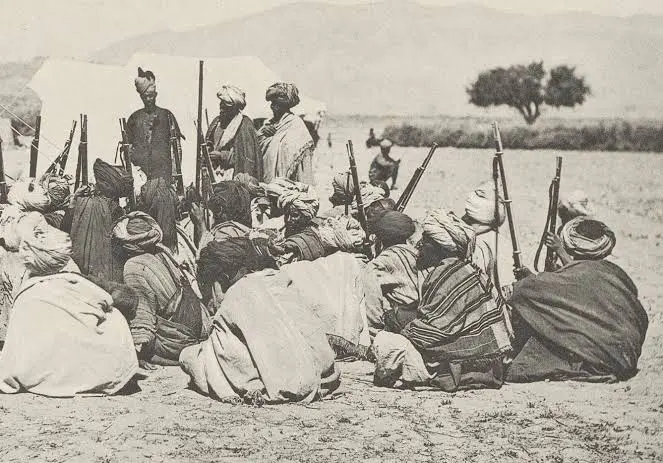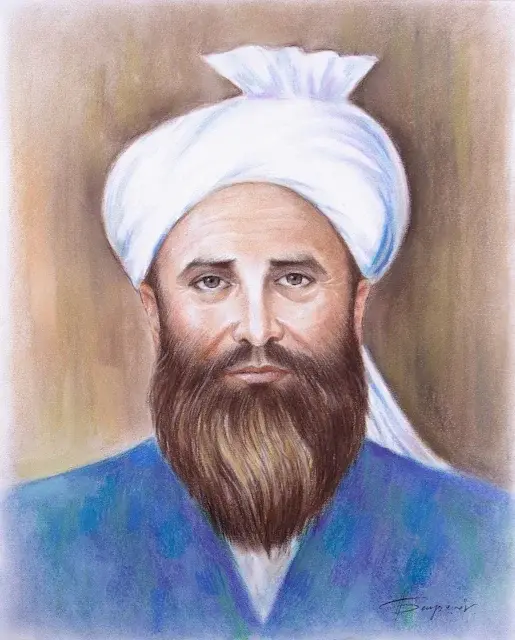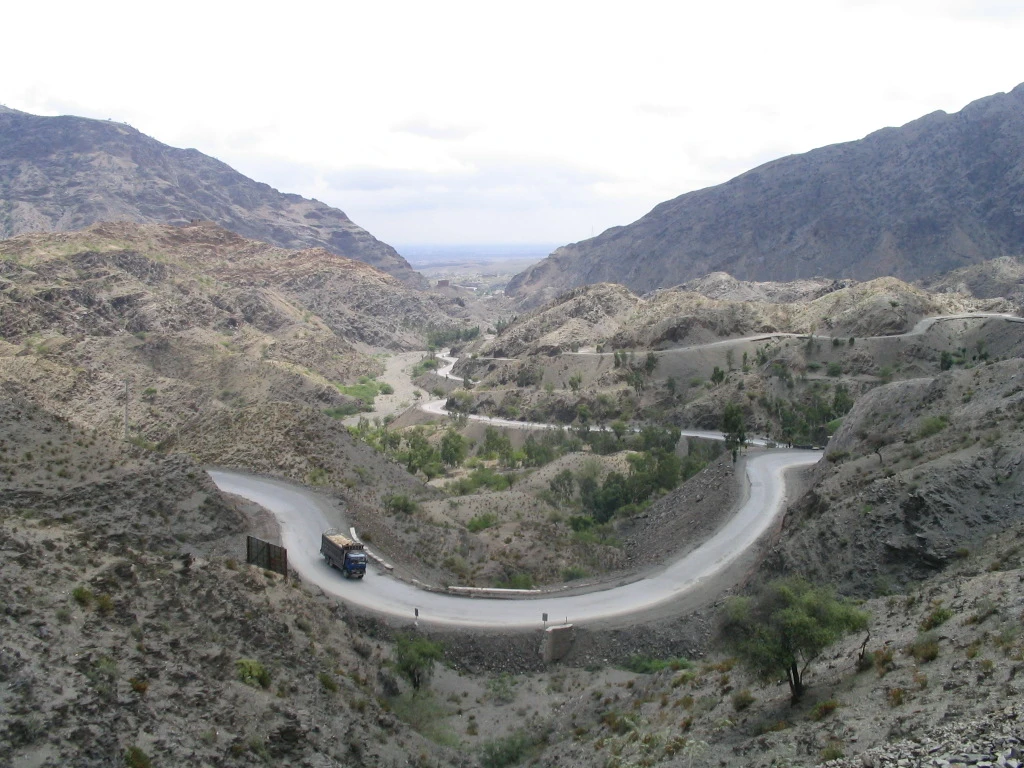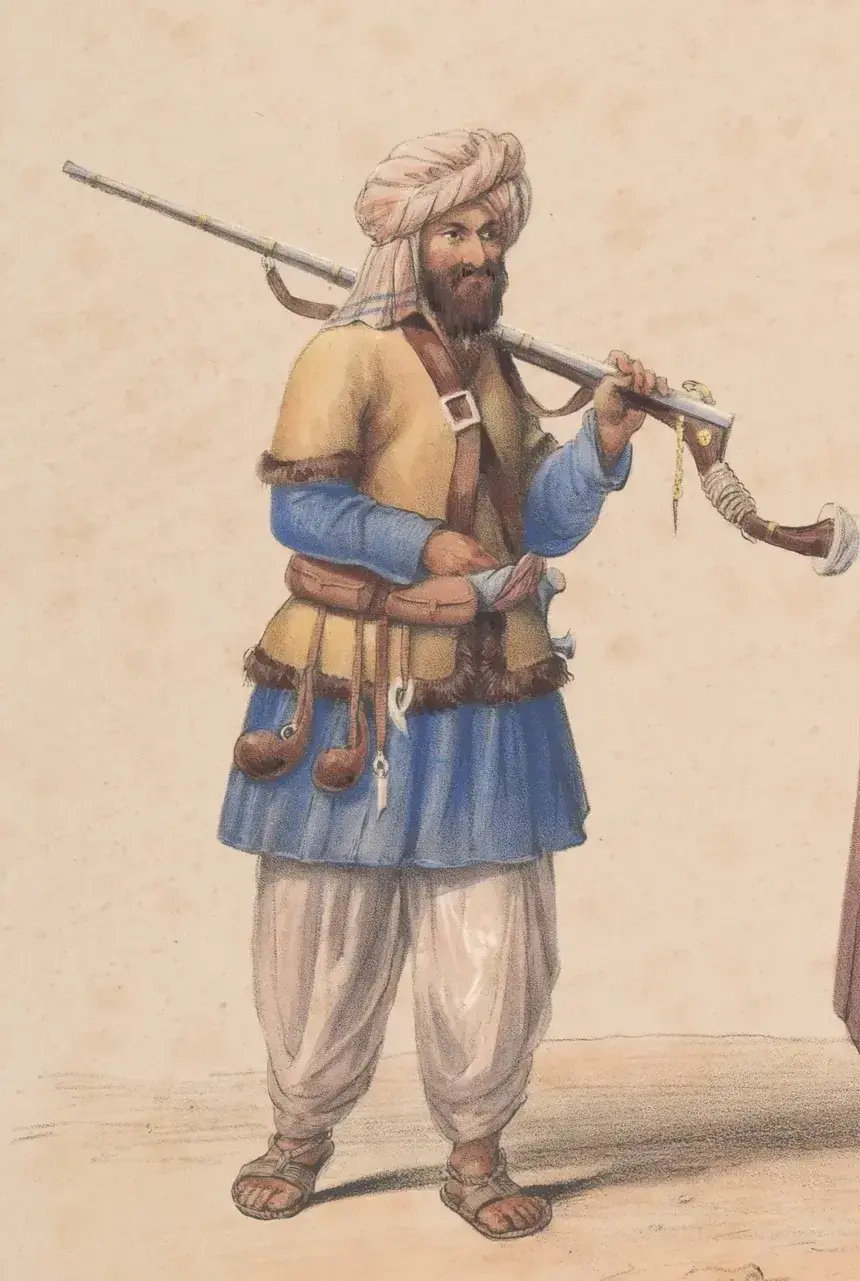
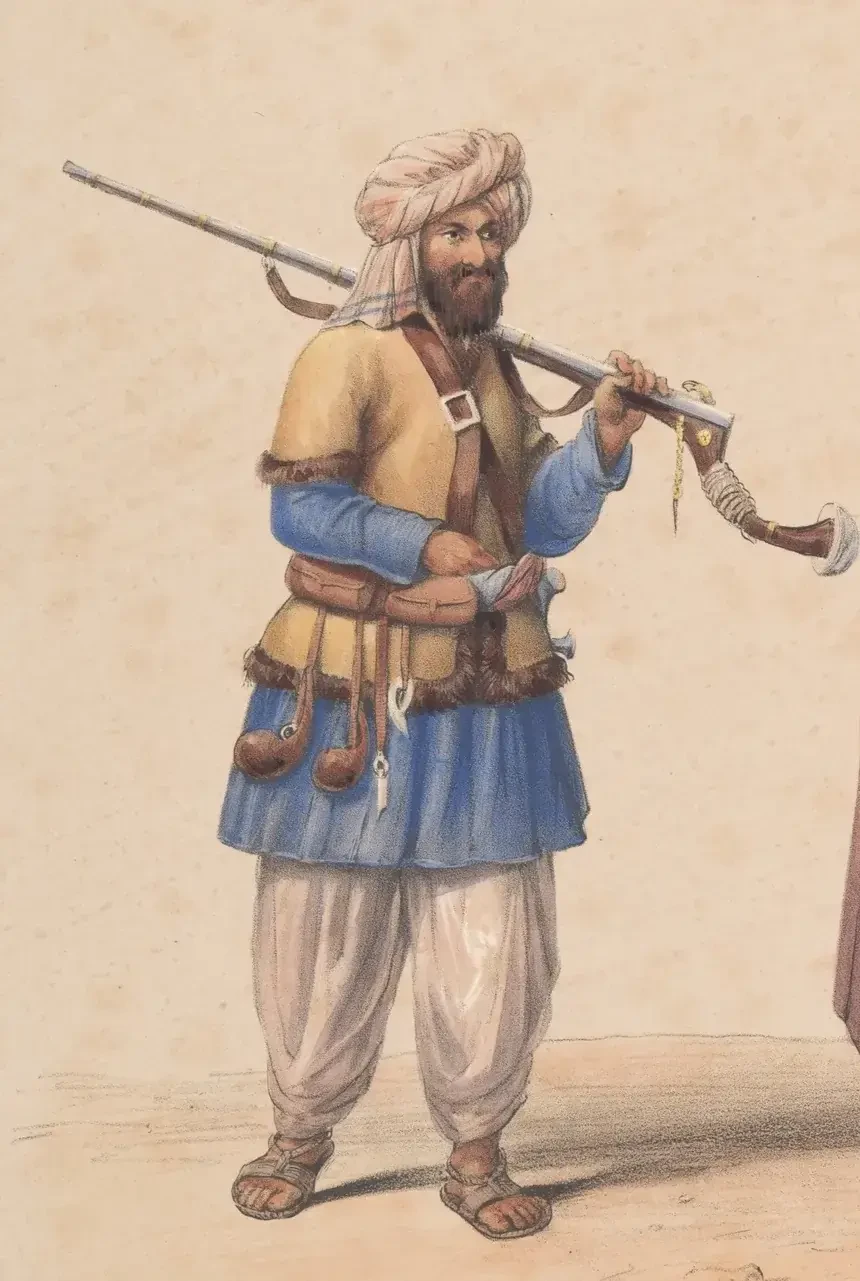
Gharghasht (غرغښت) is one of the four major Pashtun tribal confederations according to traditional Pashtun genealogy. The confederation comprises four main tribes and numerous sub-branches spread across Afghanistan and Khyber Pakhtunkhwa. Its traditional tribal presence extends across a vast geographical area, from the Barozai clan of Sibi in the southern Pashtun belt to the Jadoon tribe in the east and the Safi (Sapi) tribe in the northern regions, including the Pamir Mountains. These tribes represent the broad geographical reach and diverse ancestral traditions associated with the Gharghasht confederation.
Gharghasht in the genealogies
In Neamet Ullah's History of the Afghans, Abd ul-Rashid Pathan (Qais) had three sons: Sarbunni the eldest, Batani the second and Ghurghusht the third. [7] Olaf Caroe follows the same order, and notes that a fourth line, the Karlanri hill tribes, is placed differently by different genealogists: some link Karlanri to the Ghurghusht branch by giving Ghurghusht another son named Burhan and making him Karlanri's father. [1] Caroe notes that the Sheranis of the Takht-i-Sulaiman are generally regarded as Ghurghusht, because their ancestor Sherani left the Sarbanri line, married a Kakar woman and cast in his lot with her tribe. [1]
The Baluchistan district gazetteers of 1907 place the traditional home of Qais in the tract just west of the Koh-i-Sulaiman, which Afghans called Khorasan and the British called Kakar Khorasan, and add that the descendants of his three sons still lived in large numbers round the slopes of the Takht-i-Sulaiman. [4]
The Gharghasht tribe is divided into three main branches.
Danai
Babai
Mando
Danai
According to traditional Pashtun genealogy, Danai is one of the three sons of Gharghasht. Danai's lineage includes four sons, from whom several major tribes and numerous sub-branches are traditionally traced.
The four sons of Danai are the following.
Kakar
Naghar
Parni/Panni
Dawai
The 1901 census of Baluchistan, quoted in the Zhob gazetteer, notes that Danai never became the name of a tribe himself, but that his descendants make up two of the most important tribes of the province, the Kakars and the Pannis. [4]
Kakar
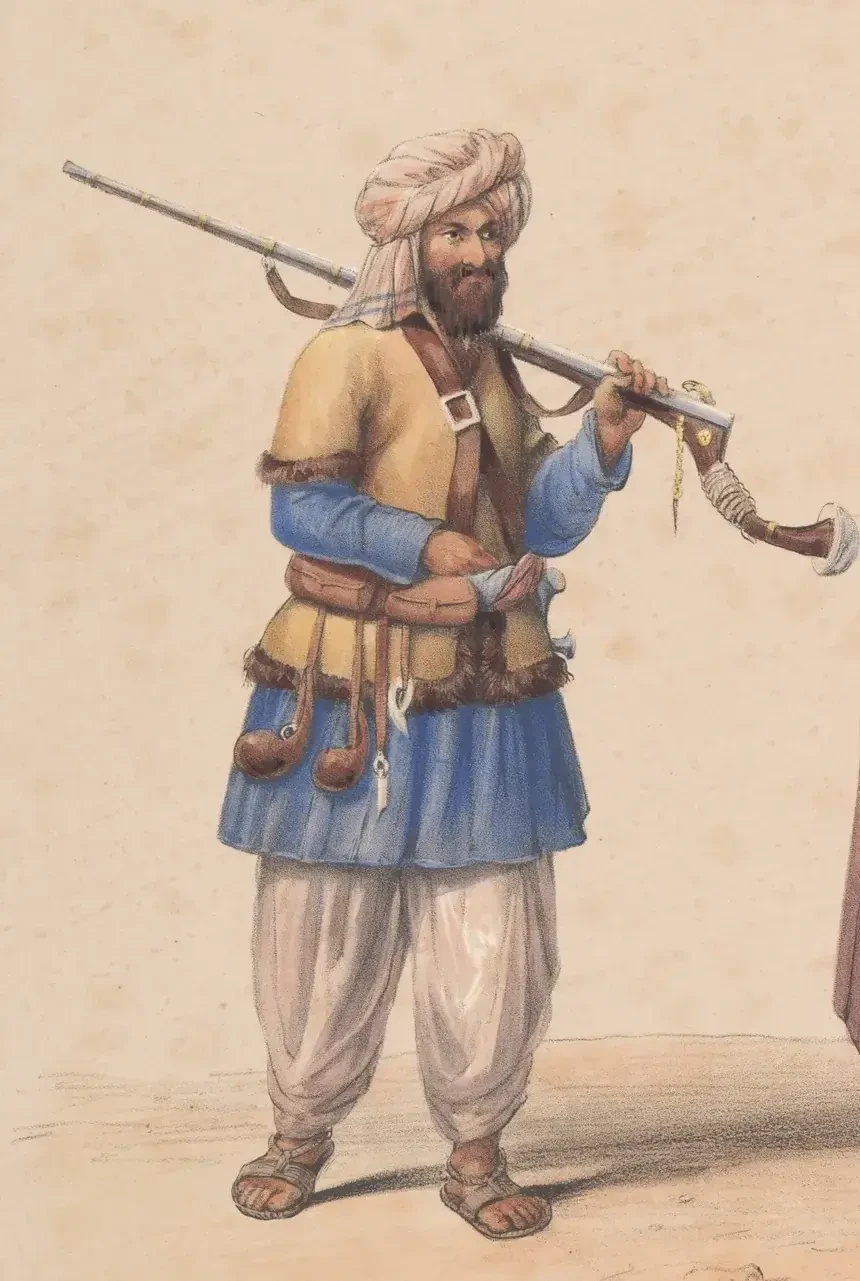
Caroe describes the Kakars of Zhob, Loralai and parts of Sibi as a very large tribe in poor country; as neighbours of the Baloch they had taken on some of the Baloch regard for chiefs and were less anarchic than most Pathans. [1] In the Zhob District of 1901, which then comprised the Fort Sandeman, Kila Saifulla and Hindubagh tahsils, Kakars made up 68 per cent of the Afghans and 67 per cent of the whole indigenous population. They were counted in three clans, the Sanatia, the Sanzar Khel and the Sargara. The Sanzar Khel, by far the largest, descend from Sanzar, son of Sughrak and grandson of Kakar, and outsiders called them Sarans or Zhobis. [4] The Loralai District held another 18,419 Kakars in 1901, 41 per cent of its Afghans, nearly all of them Sanzar Khel. [6]
Naghar
The Loralai gazetteer identifies the Nahars, a section of the Ispani clan of the Khetrans, as the remnant of the Naghar Afghans descended from Naghar, Kakar's brother. The Naghars had spread east and south into the Indus valley: in Akbar's reign Sultan Muhammad Khan of Bhakkar marched against the Khan of the Naghars at Sitpur, then one of the mahals of the Multan province. A few Nahars also lived among the Marris and among the Utman Khel Kakars of Bori. [6]
Panni
The Pannis, also written Panris, were originally a nomad tribe of the Ghurghusht Afghans. The Sibi gazetteer records that one branch, the Safis, was still found in large numbers near Ghazni, and another, the Gaduns, in Peshawar District east of the Yusufzai country. The branch that reached Baluchistan moved from the west to the Sulaiman hills and then south: the Musa Khel and Isot stayed in what became the Musa Khel tahsil, while another section entered Sangan from the Bolan Pass and took Badra, Quat-Mandai and Sibi. [5] H. A. Rose, following Raverty, gives Panni's ancestor as Parnai, son of Danai, with eighteen sons who founded as many sub-tribes, among them the Musa, Sot, Marghozanai, Jadun, Safai, Ali, Mandu, Dilpal and Lawarn. [2] One Panni, Daud Khan, was a soldier of fortune in late Mughal India whose generosity passed into a proverb meaning that, if the worst comes to the worst, there is still Daud Khan to fall back on. [5]
Barozai of Sibi
A local history of the Barozais by Mulla Mahmud Jaskani Baloch, used by the Sibi gazetteer, dates the Sibi branch to about 1470, when Bara Khan married the daughter of the chief of the Mizri Kakars, who then held Dadhar. By about 1570 to 1575 the Pannis held the fort and district of Sibi, and the Mughals sent three expeditions against them. In 1695 Sibi was held by Mirza Khan, a Barozai who had received the title of Nawab from Delhi and also administered Upper Sind; his son Bakhtiar Khan was killed fighting imperial troops in 1702. Local tradition credits his successor, Ismail Khan I, with building the town of Dera Ismail Khan. In 1759 Ahmad Shah Durrani gave a warrant entrusting Sibi and the Barkhan, Khetran and Hasni dependencies to two rival Barozai claimants. [5]
The Khajak section later became the strongest in the tribe, and the Sibi proverb said that "though the Kakars may coquet in the hills, the Khajaks lord it in the plains". In 1839 Misri Khan, the real power in the tribe, offered his services to Shah Shuja and was taken into British pay; in 1841 British troops occupied and dismantled the town of Khajak, and the Marris then took Badra and Quat-Mandai from the Pannis. [5] In 1901 Sibi District had 3,050 Pannis in nineteen sections, including the Barazai, Khajak, Marghazani, Musa Khel and Safi. [5]
Musa Khel
In Loralai District the Pannis were represented by the Musa Khel and the Isot, who by 1907 were separate tribes for practical purposes, cut off from the Pannis of Sibi by a wide belt of country. The 1901 census counted 10,525 Musa Khels there, in two main clans, the Bel Khel and the Laharzai. [6]
Dawai
The Dawai left no large tribe of their own. A few Dawis lived among the Kakars of Zhob and among the Pannis of Thal Chotiali, and Rose describes them as mixed with the Kakar. [4] [6] [2] A dam in the Zhob District, the Band-i-Dawi, was said to have been built by the Dawi tribe in the reign of Nadir Shah. [4]
Jadoon (Gadun)
The Gadun or Jadun live on both sides of the Indus. Rose records their own tradition of descent from Sarhang, a great-grandson of Ghurghusht, two of whose sons fled to the hills of Chach and Hazara because of a blood feud; Raverty, by contrast, lists Jadun among the sons of Parnai. [3] [2] They held the south-eastern part of the country between the Peshawar and Hazara borders and the southern slopes of the Mahaban, and later spread up the Dor valley as far as Abbottabad. Rose divides them into three clans, the Salar, Mansur and Hassanzai, and notes that the Hassanzai had lost their connection with the parent tribe and forgotten Pashto. [3] Caroe describes the Gaduns who still spoke Pashto as a small group near Sitana and Topi on the Mahaban, and the larger Jadun group of Hazara, round the Rash plain by Abbottabad, as speaking the Panjabi of Hazara. [1]
Safi
Caroe places the Safis in the recesses of the Bajaur dales between the hill Mohmands and the Tarkanris, and notes that they were probably the last Afghan tribe to accept Islam. [1] Raverty, as summarised by Rose, divided them into three clans, the Gurbuz, Wader and Masaud, numbering nearly 20,000 families, most of them in the valleys of Laghman, Pech, Kunar and Kaman, with some in Saur Kamar paying tithe to the chief of Bajaur. Tradition says a Safi who had quarrelled with the ruler of Bajaur took Badel, the first village won from the Tor Kafirs, and his followers then drove the Tor Kafirs out of Pech. In 1738 the Safis, then numerous around Charikar and elsewhere in the province of Kabul, suffered severe reprisals from Nadir Shah for opposing his march. [2]
Babai
The Babai (or Babi) are a Pashtun tribe son of Gharghasht. Their historical homeland is linked to southern Afghanistan, particularly the Kandahar region, and the surrounding Pashtun territories. Traditionally speaking the southern Kandahari dialect of Pashto and following the customary code of Pashtunwali, the Babai tribe gained prominence during the Mughal era, when some of its members migrated into the Indian subcontinent.
Rose's table of Pathan genealogies describes the Babai as mixed with the Durranis, and the 1907 Baluchistan gazetteers note a few Babis in Quetta-Pishin and Kalat. [2] [4]
Mando
The Mando Khel (مندَو خېل), also known as Mandokhel, are a Pashtun tribe traditionally associated with the Gharghasht tribal confederation, and is said to be the 3rd son of Gharghasht, but some accounts mention Mando as a subtribe of Parni son of Danai. The tribe is primarily associated with the Zhob region of Balochistan, Pakistan, and adjoining areas of Afghanistan.
The Zhob gazetteer of 1907 rejects the Panni connection and describes the Mando Khel as descended from Mando, one of the three sons of Ghurghusht and a cousin of Kakar. In their own tradition they came from Nawar in Khorasan and, together with the Musa Khel and the Sanzar Khel Kakars, drove the Mughals out of Zhob. In 1901 they numbered 4,280, divided into the Hadizai or Sheikh and the Hider Khel, and occupied the country round Fort Sandeman, with Apozai, Kam Gustoi and Buranj as their main villages. [4] Raverty's list, followed by Rose, counts a Mandu among the sons of Parnai. [2]
دا قوم په کومه برخه کې دی
- د دې برخه
- Qais Abdur Rashid
- لاندې ښاخونه
د Ghurghusht قوم پېژندنه
لنډه پېژندنه
- ټاټوبی
- The Kakar country (Zhob, Pishin, Quetta and Loralai) and Kandahar
- نور نومونه
- Ghurghushti, Ghoorghoosht, Gharghasht
د قوم د پېژندنې سرچينې
سرچینې
- The Pathans: 550 B.C. -- A.D. 1957
The source supper all the genealogy and Ethnohistory Of Gharghast confederation and It's subtribes.
- H. A. Rose (1914), A Glossary of the Tribes and Castes of the Punjab and North-West Frontier Province, Vol. III (L–Z): "Panni", pp. 198–199; "Pathan" genealogies, p. 223; "Safi", pp. 341–342
Raverty's account of Parnai son of Danai and his eighteen sons (including Jadun, Safai, Mandu); genealogical table of the Ghurghusht branch (Babai mixed with Durrani, Dawai mixed with Kakar); Safi clans, homes and Nadir Shah's reprisals of 1738. Consulted 14 October 2026.
- H. A. Rose (1911), A Glossary of the Tribes and Castes of the Punjab and North-West Frontier Province, Vol. II (A–K): "Gadun", pp. 272–273
Gadun or Jadun of Hazara and Attock: descent from Sarhang, great-grandson of Ghurghusht; lands on the Mahaban and Dor valley; Salar, Mansur and Hassanzai clans. Consulted 14 October 2026.
- C. F. Minchin (1907), Baluchistan District Gazetteer Series, Vol. I: Zhob District, pp. 50–51, 67, 76–77
Qais and Kakar Khorasan; Danai's descendants the Kakars and Pannis; Kakar share of Zhob population and clans in 1901; Dawi; Band-i-Dawi; Mando Khel origin, tradition, numbers and villages; Babis in Quetta-Pishin and Kalat. Consulted 14 October 2026.
- Baluchistan District Gazetteer Series, Vol. III: Sibi District (1907), pp. 61–64
Pannis as a Ghurghusht tribe; Safi and Gadun branches; migration to Sibi; Barozai history from c. 1470 to 1841; Khajak section; Daud Khan Panni; 1901 sections. Consulted 14 October 2026.
- Baluchistan District Gazetteer Series, Vol. II: Loralai District (1907), pp. 52–53, 74, 78–80, 98
Danai's sons Dawi and Naghar; Kakars of Loralai in 1901; Musa Khel and Isot Pannis; Naghar descendants among the Nahars of the Ispani Khetrans and Akbar-era Naghars of Sitpur. Consulted 14 October 2026.
- Neamet Ullah, History of the Afghans, translated by Bernhard Dorn, Part I (1829), p. 38
Abd ul-Rashid Pathan's three sons Sarbunni, Batani and Ghurghusht (the third). Consulted 14 October 2026.
کومه تېروتنه یا ورکه سرچینه مو لیدلې؟ موږ تېروتنې څنګه سمې کوو
عام پوښتنې
Which tribes descend from Gharghasht?
The genealogies give Gharghasht three sons, Danai, Babai and Mando. Danai's sons were Kakar, Naghar, Panni (Parnai) and Dawai. The Panni line includes the Barozai of Sibi and the Musa Khel, and Raverty also counts the Jadun and Safi among Parnai's sons.
Where do the Kakars live?
The 1907 Baluchistan gazetteers and Olaf Caroe place the Kakars in Zhob, Loralai and parts of Sibi in northern Balochistan. In 1901 they made up about two thirds of the indigenous population of Zhob District.
Are the Jadoon Pashtuns?
H. A. Rose records the Jadun (Gadun) tradition of descent from Sarhang, a great-grandson of Ghurghusht, and considered them almost certainly not of Indian origin. The Hazara Jaduns had largely given up Pashto for the local Panjabi by the early twentieth century, while the Gaduns of the Mahaban kept it.