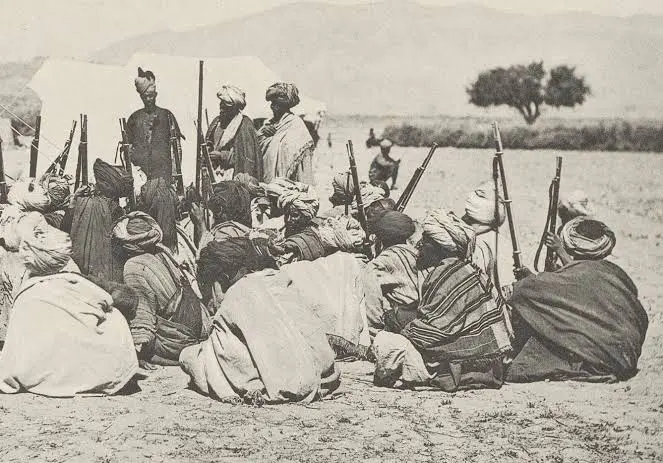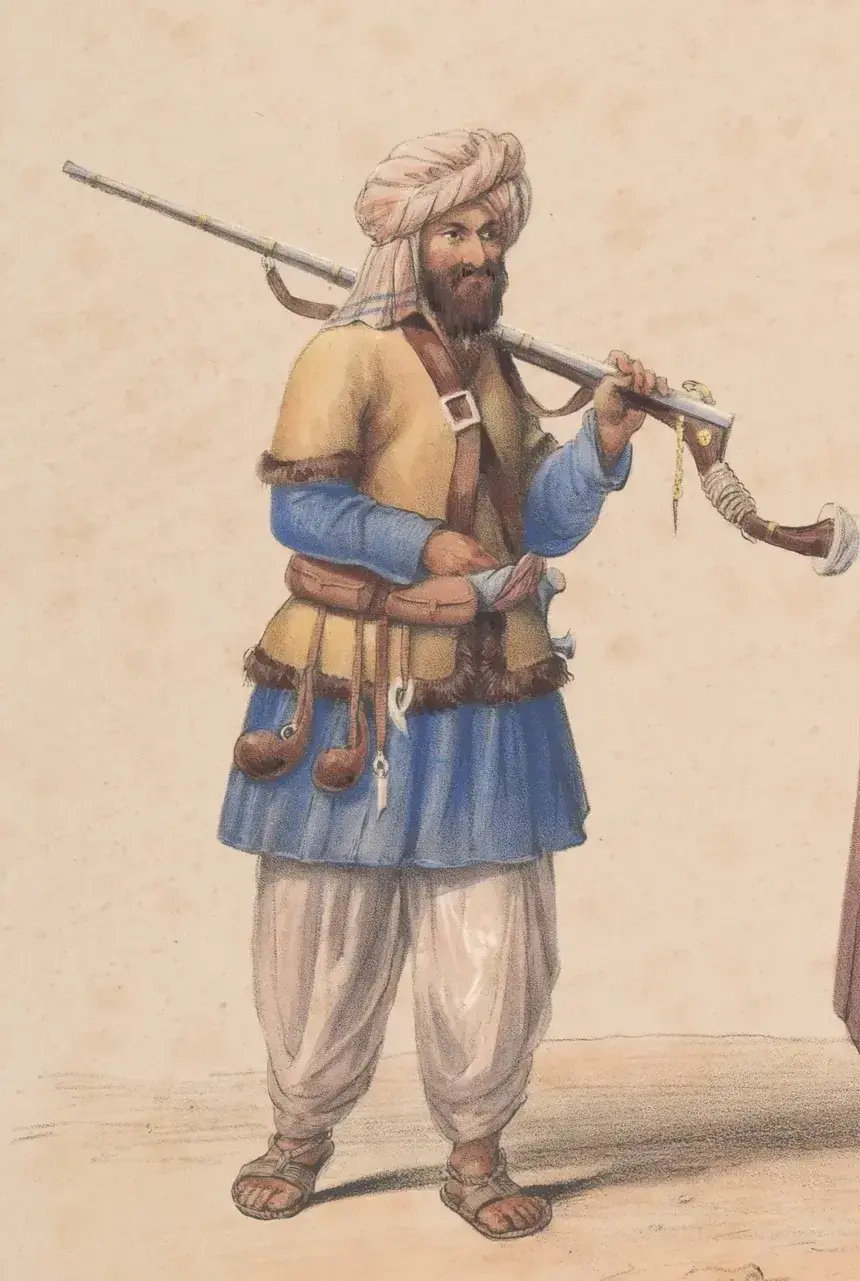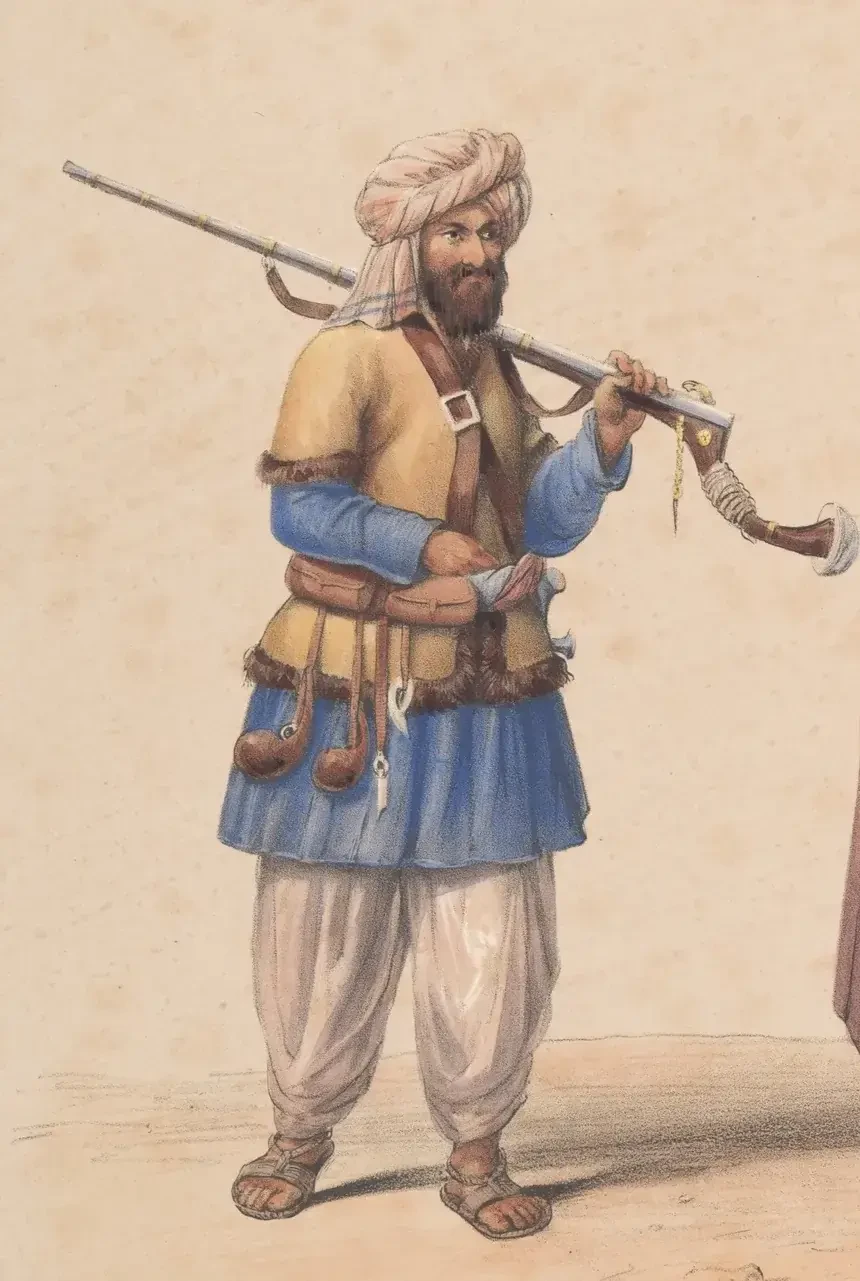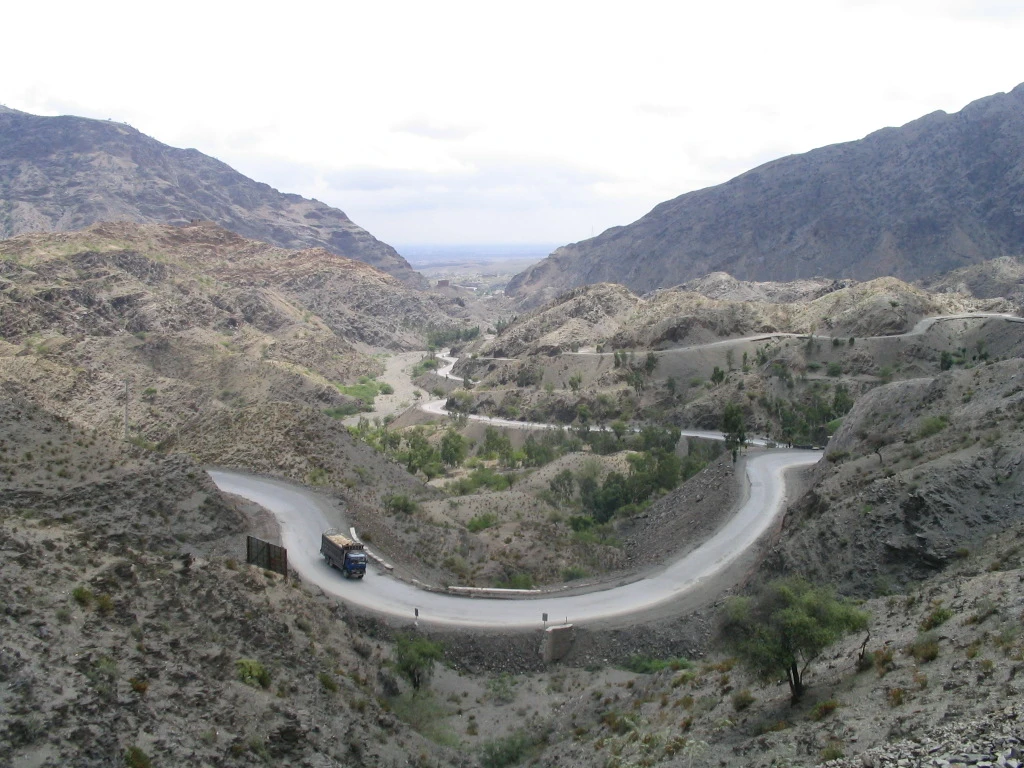
The Afridi hold the hills between Peshawar and the Safed Koh (Spin Ghar, سپين غر): the Khyber Pass, the Bazar and Bara valleys, the Kajuri plain and, in summer, the high basin of Tirah Maidan. A few live in Afghanistan. The man is an Aprīdai (اپريدی), the tribe Aprīdī (اپريدي), and Afridis themselves turn f into p: Olaf Caroe heard them call themselves Aparidai. [4] Their speech is the hard northern Pashto, Pakhto, which the Imperial Gazetteer of 1908 found close to the Yusufzai standard, with its own accent and some words of its own. [1] [6]
Tradition makes their ancestor Faridun, a descendant of Karlan, which places them in the Karlanri group of hill tribes with the Wazir, Bangash, Orakzai and Khattak. [1] [4] Charles Kieffer's Encyclopaedia Iranica entry traces the same descent from Karlan but also groups the Afridi with the "eastern" Pashtuns and the Ghilzai, so even the specialist literature does not classify them in one way. [1] H. W. Bellew, writing in 1880, recorded that the Afridi, with the Orakzai, Bangash, Khattak, Tori and their neighbours, were divided between two hereditary factions, Samal and Gar, which no man ever changed. [7]
The eight clans
Six clans are counted as the Khyber Afridi. Two more, the Adam Khel and the Aka Khel, are described by Kieffer as assimilated clans which the six do not fully recognise. [1] A Pashto-language account gives the branches as ملک دین خېل (Malikdin Khel), قنبر خېل (Kambar Khel), کوکي خېل (Kuki Khel), زخه خېل (Zakha Khel), سه پای (Sipah), کمر خېل (Kamar Khel or Kamrai), اکا خېل (Aka Khel) and ادم خېل (Adam Khel). [10]
The Imperial Gazetteer's table, drawn up after the Tirah campaign, gives the Khyber clans their country and the number of fighting men the government reckoned each could put in the field. Kieffer places the other two. [6] [1]
Kambar Khel: Tirah Maidan, the Bara valley and the Kajuri valley; 4,500 men.
Malikdin Khel: Tirah; 5,000 men. Their chiefs lived at Chora in the lower Bazar valley. [6] [11]
Zakha Khel: the Khyber, the Bazar valley and the Bara valley; 4,500 men.
Kuki Khel: Rajgal in Tirah, and the Khyber around Ali Masjid and Jamrud. [11]
Sipah: the Bara valley and the Kajuri plain; 1,200 men.
Kamrai (Kamar Khel): the Bara valley; 600 men.
Aka Khel: south of the Bara river, next to the Orakzai.
Adam Khel: the hills between Peshawar and Kohat, on both sides of the Kohat Pass.
The Adam Khel, the "Pass Afridis" of British reports, were the one large section that did not migrate between summer and winter grounds. [1] [6] Khushal Khan Khattak wrote a long, frank poem on the beauty of the Adam Khel girls of the Kohat Pass, which Caroe quotes in translation: "Fair and rosy are the Adam Khel maidens, / Among them are beauties of every type". [4]
Summer in Tirah, winter in the Khyber
J. W. Murray's Dictionary of the Pathan Tribes found most Afridi still moving with the seasons at the end of the nineteenth century: up to Tirah in summer, down to the Khyber, Bazar and Kajuri valleys in winter. [1] Mountstuart Elphinstone heard the same in Peshawar in 1809. The "Khyberees", he was told, lived in terraced houses in their valleys, in movable mat huts on the mountains in summer, and in winter in caves cut into the earthy hillsides of the lower hills. He described them in dark-blue turbans and long, close-fitting dark-blue tunics reaching to mid-calf, with sandals of straw or dwarf-palm leaf, carrying matchlocks fitted with a wooden fork as a rest. He reckoned the Afridi, Shinwari and Orakzai together at about 120,000 people. [8]
Tirah Maidan lies about thirty miles from Peshawar, at six to seven thousand feet under the pine-covered crest of the Safed Koh. Caroe wrote that every Afridi spoke of Maidan and its extension Rajgal as the rival of Kashmir, and that no stranger was admitted there. [4] Kieffer adds that the Afridi took Tirah early in the nineteenth century from the Tirahi, a Dardic-speaking people. [1] For the neighbouring tribe of Tirah, see the Orakzai.
Where the Afridi came from
Herodotus lists a people called the Aparytai in the seventh satrapy of the Persian empire, next to the Gandarioi of the Peshawar valley. Bellew in 1880 had no doubt that the Afridi were the Aparytai, and Caroe in 1958 thought the equation reasonable, noting that Grierson and Stein had made it before him and that the Afridi habit of saying p for f brings the two names close. [7] [4] Kieffer rejects it. The Persian inscriptions never mention the Aparytai, nobody knows where they lived, and the sound changes needed to reach Apridi are, in his view, highly improbable. [1]
Many Afridis hold that they descend from the soldiers of Alexander. Caroe observed that the belief was common on the Frontier, and that it almost certainly came from the Greek learning translated into Arabic under the Abbasids, since no Asian record mentions Alexander's march at all. [4] Kieffer calls it a folk tradition shared across the Dardic and Kafir country, spread by Akbar's secretary Abu'l-Fazl and revived by nineteenth-century orientalists. [1]
Kieffer's own view is that the Afridi are largely of Dardic origin, since their settlements seem to have changed little over a long period. Bellew recorded a tradition that Sultan Mahmud of Ghazni planted them in the Khyber as a military colony and that Muhammad of Ghor strengthened it with fresh settlers. Kieffer thinks this tradition probably historical and sees no conflict with a Dardic core. [1]
The tribe tells its own story of its name. A governor of Peshawar, Bellew was told, found an Afridi sitting at the door of his court who would not rise for him. "Who am I?" the man answered when asked, Dzah tsok yam?, and then: Dzah hum Afridai yam, "I too am a creature of God." In Persian āfrīda means a created being. [7]
Masters of the road
The Peshawar valley is ringed by mountains broken by four routes: the open road east to the Punjab, the Malakand to the north, the Khyber to the west and the Kohat Pass to the south. The Afridi hold the last two, and took toll from whoever used them. [1] In Elphinstone's day they kept posts along the Khyber to collect "an authorised toll" in quiet times, and took a large pension from the king in Kabul on condition that the road stayed quiet. [8]
The Khyber between Jamrud and Landi Kotal did not always belong to all the clans. The Imperial Gazetteer records that it was first shared by the Shinwari, the Zakha Khel, the Kuki Khel and the Orakzai, and that the Orakzai were pushed out when the Sikhs reached Jamrud. In 1840, while Colonel Mackeson was negotiating with the tribe, the Malikdin Khel maliks of Chora forced their way in between the Zakha Khel and Kuki Khel and built a small village at Katta Kushta near Ali Masjid. The Sipah, Kambar Khel and Kamrai then claimed their share of the Khyber allowance too. [6]
Babur is the first ruler known to have tried to bring the Afridi under control. [1] Akbar improved the road enough for wheeled carts, but the Imperial Gazetteer judged that the Mughals were "singularly unsuccessful" in keeping it open against a tribe "implacably hostile" to them. [6]
The battle at the head of the Khyber, 1672
In the spring of 1672 the Mughal governor of Kabul, Muhammad Amin Khan, set out from Peshawar, earlier than usual, on the governor's yearly move to Kabul, meaning to punish the Safi tribe on the way after a quarrel with one of his officers. The Mohmand and Safi tribes formed a confederacy with large numbers of Afridi and Shinwari and blocked the road at the edge of the Loargai plateau, between Landi Kotal and Landi Khana, where the road begins to drop towards Afghanistan. [4]
Amin camped at Jamrud and sent the Mohmand Arbab of the Peshawar plain forward with a jirga to demand free passage. The tribes refused. The army passed Ali Masjid and the narrows without trouble, but at Loargai found breastworks thrown across the defile. Caroe names the leaders of the resistance as two Afridi chiefs, Aimal Khan and Darya Khan, the heroes of Khushal Khan's poems. Boulders piled on the slopes were rolled onto the Mughal columns, both flank commanders were killed, and the breastworks held all day. Amin was then advised to turn the position by the Tahtarra stream; the guide led the army into a trap. Caroe relates that Amin and four others were the only survivors, and that his wife, mother, sister and daughters were taken. Some women were later ransomed. Amin's wife refused to return. [4]
The Imperial Gazetteer puts Amin's army at 40,000 men and says the tribes took his treasure, elephants, women and children. [6] The figure comes from the tribal side. Khushal Khan Khattak, who as a Mughal vassal was probably no further forward than Jamrud that day, later counted it as the first of his people's victories: [4] [9]
The first fight was in the lofty ridge of Tahtar, When scattered were forty thousand Moghal foe. Their sisters and daughters became captives of the Pathan, Their horses, camels, elephants, and baggages.
In another poem he prays for his two allies: "[Aimal] Khan and Darya Khan, from death God preserve them, / Never have they failed me at the time of need." [9] Caroe calls both men Afridi and describes Khushal and "Aimal Khan, Afridi" storming the Mughal fort at Nowshera together in 1674. [4] The Pashto Wikipedia article on Darya Khan, which draws on Khushal's poems and Afzal Khan Khattak's Tarikh-i Murassa, names him as Darya Khan son of Piyao Khan and calls Aimal Khan a Mohmand. [10]
The pass stayed shut for two years. [2] Mughal armies were beaten again at Gandab in Mohmand country in 1673 and in the Khapakh Pass in 1674, and Aurangzeb came north in person, staying at Attock to direct the war. [4] [3]
Allowances, Afghans and the British
Ahmad Shah Durrani enrolled Afridi fighters only nominally. [1] Kabul's rulers paid the tribes allowances to keep the road open before the First Anglo-Afghan War and again after it. [2] The Sikh general Hari Singh built Jamrud fort at the mouth of the pass in 1836. [2]
In July 1839 Captain Wade marched up the Khyber from Jamrud with 10,000 to 11,000 men, Sikhs included, escorting Shah Shuja's son Timur to Kabul. The defenders of Ali Masjid, 509 jazailchis (musketeers) backed by several hundred Afridis, gave up the fort on 27 July; the British lost 22 killed and 158 wounded. Later about 6,000 Afridis stormed the post near Lala China, garrisoned by sickly Yusufzai auxiliaries who had just been paid, and killed 400 of them. In January 1842 Afridis closed the pass against the brigade sent to relieve Jalalabad, and Lieutenant-Colonel Moseley's two regiments, cut off at Ali Masjid with almost no food, had to fight their way back to Jamrud. [6]
From 1857 to 1878 the Afridi were subsidised from Kabul, which kept an Afghan garrison at Ali Masjid, and shortly before the Second Anglo-Afghan War Amir Sher Ali gave about 5,000 rifles to the Afridi and Shinwari jirgas. When the British took Ali Masjid in November 1878 the Afridis stripped the retreating Afghan troops of their clothes and rifles in the Khyber and the Bazar valley. [6] The Zakha Khel malik Walli Muhammad Khan guided the Afghan garrison out of Ali Masjid by night through the Bazar valley, went to Kabul, and came over to the British only on Amir Yakub Khan's advice. Robert Warburton, who took charge of the Khyber in 1879, listed the four leading maliks who had sided with the Amir: Ahmad Khan of the Sipah, Sarfaraz Khan of the Malikdin Khel, Abdulla Nur of the Kuki Khel and Walli Muhammad Khan. [11]
The Treaty of Gandomak, signed on 26 May 1879, gave the British control of the Khyber and Michni passes. [5] The Afridi were then granted allowances totalling Rs 87,540 a year, and their maliks signed an agreement to guard the pass with their own men. A levy of about 400 jezailchis, later 600, was raised to escort caravans; it became the Khyber Rifles. [6] Caroe credits its founding to Aslam Khan, son of Shah Shuja's wazir Muhammad Usman Khan, a Saddozai whom the Afridi had more than once sheltered at Chora. [4]
In August 1897 the Afridi attacked the Khyber posts and sacked the fortified serai at Landi Kotal, which the Khyber Rifles could not hold for want of water. Sir William Lockhart's force went into Tirah, and by April 1898 the tribe had paid a fine of Rs 50,000 and handed over 800 breech-loading rifles. Under the settlement of October 1898 the allowances were restored, with Rs 250 more for the Kambar Khel, and the Afridi agreed to deal with no other power and to accept roads and railways through the Khyber. [6] Kieffer notes that the tribe used each Anglo-Afghan war and both world wars to press its independence, and that its position made the British generous with subsidies. [1]
British writers of these years were hostile. Bellew called the Afridi robbers with no real religion, and Elphinstone wrote that he had never heard of anyone hiring a Khyber escort, as travellers did in the lands of every other tribe. [7] [8]
Numbers
Murray counted 32,900 Afridi fighting men at the end of the nineteenth century. C. C. Davies, in the Encyclopaedia of Islam, put the whole tribe at about 50,000, which Kieffer thought reasonable. Unofficial Afghan sources claimed 60,000 Afridi in Afghanistan alone. Kieffer, who met many Afridi there as traders, labourers and farmers, thought the real number much smaller and the large figure a product of Kabul's claim to Pashtunistan. [1] All these figures are a century old or more. Kieffer's description of Afridi country as a free zone for the arms trade dates from 1984. [1]
دا قوم په کومه برخه کې دی
- د دې برخه
- Kodai
- لاندې ښاخونه
- Kuki Khel
- Malikdin Khel
- Qambar Khel
- Kamar Khel
- Zakha Khel
- Sipah (Afridi)
- Aka Khel (Afridi)
- Adam Khel
- Mita Khel
- Miri Khel
د Afridi قوم پېژندنه
چېرته چې سرچینې سره توپیر لري
Ibbetson (in Rose's Glossary, vol. III) and Bellew place the Afridi under Kakai; the Khulasat al-Ansab, Raverty, Encyclopaedia Iranica and Caroe place them under Kodai.
لنډه پېژندنه
- نفوس
- about 30,000 families (1891, The Khyber and Kohat pass hills, the western Cherat range and northern Tirah (Bellew's reckoning))5
- 32,900 fighting men (1899, Whole tribe: eastern Safed Koh, the Bazar and Bara valleys and northern Tirah (Murray's Dictionary of the Pathan Tribes, as cited by Encyclopaedia Iranica))3
- about 19,800 fighting men (1908, Six Khyber clans only (Kambar, Kamrai, Kuki, Malikdin, Sipah and Zakha Khel), sum of the Imperial Gazetteer's estimates; Adam Khel and Aka Khel not counted)7
- هېوادونه
- Pakistan, Afghanistan
- چېرته اوسېږي
- Khyber District, Tirah, Bara valley, Kohat Pass
- ژبه
- Pashto (northern dialect)
- دين
- Sunni Islam
- مهمې خېلې
- Kuki Khel, Malikdin Khel, Qambar Khel, Kamar Khel, Zakha Khel, Sipah (Afridi), Aka Khel (Afridi), Adam Khel
- نور نومونه
- Apridi, Aparidi, Afreedee
ټاټوبی
- Khyber PassPass of about 33 miles from Jamrud to Dakka on the road from Peshawar to Kabul, held by the Afridi in the east and the Shinwari in the west. The Afridi destroyed a Mughal army here in 1672.
- Ali MasjidFort built under Dost Mohammad Khan where the Khyber narrows to 40 feet. A British mission was turned back here in 1878, and British troops took it in fighting on 20 and 21 November 1878.
- Landi KotalSummit and bazaar town of the Khyber, shared by Afridi and Shinwari. The Afridi sacked its serai in August 1897, and Afghan troops attacked the post in May 1919.
- Jamrud FortFort at the mouth of the Khyber built by the Sikh general Hari Singh in 1836. Akbar Khan attacked it on 30 April 1837 and Hari Singh was mortally wounded.
نامتو کسان
Aimal Khanfl. 1672–1674
Afridi chief who, with Darya Khan, led the tribes that destroyed Muhammad Amin Khan's army in the Khyber in 1672, and who took the Mughal fort at Nowshera with Khushal Khan Khattak in 1674.8
Darya Khanfl. 1672
Afridi malik named by Caroe as joint leader of the 1672 resistance in the Khyber and praised in Khushal Khan Khattak's poems.8
Sarwar Khanfl. 1738
Afridi who, in the account Raverty quotes, guided Nadir Shah's cavalry by the Tahtara route to surprise the Mughal camp near Jamrud.9
Mulla Sayyid Akbarfl. 1897
Aka Khel Afridi religious leader whose call brought the Afridi and Orakzai clans of Tirah together in the rising of August 1897.7
د قوم د پېژندنې سرچينې
- Khulasat al-Ansab, quoted in Dorn, Part II annotations p. 130
- Raverty, Notes on Afghanistan and Part of Baluchistan (1880), p. 94
- Encyclopaedia Iranica, "Afridi" (C. M. Kieffer), vol. I/6 pp. 579–580
- Ibbetson, in Rose's Glossary, vol. III pp. 252–253
- Bellew, An Inquiry into the Ethnography of Afghanistan (1891), pp. 89–91
- Elphinstone, An Account of the Kingdom of Caubul (1839), vol. II pp. 42–44
- Imperial Gazetteer of India, Provincial Series: North-West Frontier Province (1908), pp. 17, 23, 228–233
- Caroe, The Pathans 550 B.C.–A.D. 1957 (1958), Table V pp. 21–22, pp. 234–235, 272
- Raverty, Notes on Afghanistan and Part of Baluchistan (1880), pp. 37, 41–42
سرچینې
- Charles M. Kieffer — "Afrīdī", Encyclopaedia Iranica, vol. I, fasc. 6 (1984), pp. 579–580
Main source. Used for the tribe's language and traditional ancestry, the clans, seasonal movements, theories of origin (Aparutai, Greek descent, Dardic origin, the Ghaznavid military colony), strategic position, relations with Mughals, Sikhs and British, subsidies and the population estimates. Consulted 11 October 2026.
- Andreas Wilde — "Khyber Pass", Encyclopaedia Iranica (published 27 September 2022)
Used for the length and geography of the pass, the tribes of the Khyber area, the nominal control exercised by Kabul, the 1672 destruction of a Mughal army, Jamrud fort, allowances paid to the tribes, and the transfer of the Khyber region to British India. Consulted 11 October 2026.
- Sergei Andreyev — "Ḵošḥāl Khan Ḵaṭṭak", Encyclopaedia Iranica (published 20 April 2026)
Used for Khushal Khan Khattak joining the Afridi–Mohmand rebel confederacy in 1672 and Aurangzeb's two-year stay at Attock. Consulted 11 October 2026.
- Olaf Caroe — The Pathans, 550 B.C.–A.D. 1957 (London: Macmillan, 1958)
Used for the classification of the Afridi among the Karlanri and for the detailed narrative of the 1672–74 Khyber campaign, including the names of the Afridi leaders. Caroe was a British colonial official and relies on Khushal Khan's poems and Mughal accounts, so the details are given as his account. Consulted 11 October 2026.
- M. Jamil Hanifi — "Gandomak, Treaty of", Encyclopaedia Iranica (published 20 July 2002)
Used for the Treaty of Gandomak of 26 May 1879 and the transfer to British control of the Khyber and Michni passes. Consulted 11 October 2026.
- Imperial Gazetteer of India, Provincial Series: North-West Frontier Province (Calcutta, 1908), pp. 31-32, 144, 227-233
Afridi dialect close to Yusufzai Pashto (pp. 31-32); the Khyber entry (pp. 227-233): Mughal failure to hold the pass, 1672 losses, Wade's 1839 march and capture of Ali Masjid, Lala China, Moseley in 1842, original holders of the pass, Malikdin Khel at Katta Kushta in 1840, Afghan subsidies 1857-78, Sher Ali's rifles, allowances of Rs 87,540 under the Gandamak settlement, the jezailchis, the 1897 rising and 1898 settlement, and the table of Afridi sections and strengths; Pass Afridis of the Kohat Pass (p. 144). Consulted 14 October 2026.
- H. W. Bellew, The Races of Afghanistan (Calcutta, 1880), pp. 77-84
Identification of the Afridi with Herodotus's Aparytai, the Samal and Gar factions (p. 81), the tradition explaining the name Afridai (pp. 83-84) and Bellew's hostile assessment. A colonial source written in open contempt of the tribe. Consulted 14 October 2026.
- Mountstuart Elphinstone, An Account of the Kingdom of Caubul, 2nd ed. (London, 1819), vol. 2, pp. 51-54
The 'Khyberees' (Afridi, Shinwari and Orakzai) as heard of at Peshawar in 1809: numbers, dress, arms, summer mat huts and winter caves, tolls and royal pensions for the Khyber road. Consulted 14 October 2026.
- C. E. Biddulph, Afghan Poetry of the Seventeenth Century: Selections from the Poems of Khush Hal Khan Khatak (London, 1890), pp. 85-86
English translations of Khushal Khan's verses on Aimal Khan and Darya Khan and on the battle on the ridge of Tahtara with its 'forty thousand' Mughals. Consulted 14 October 2026.
- Pashto Wikipedia, 'دریا خان اپریدی' (Darya Khan Afridi)
Pashto spellings of the Afridi branches; Darya Khan as son of Piyao Khan; identification of Aimal Khan as a Mohmand, citing Khushal's poems and Afzal Khan Khattak's Tarikh-i Murassa. A tertiary source used for Pashto spellings and a Pashto-language view of the 1672 leaders. Consulted 14 October 2026.
- Robert Warburton, Eighteen Years in the Khyber, 1879-1898 (London, 1900), pp. 78-80
Walli Muhammad Khan, Zakha Khel, and the Afghan garrison's night withdrawal from Ali Masjid in November 1878; the four leading Khyber maliks who sided with the Amir; Malikdin Khel chiefs at Chora; Rajgal Kuki Khel. Warburton was the Khyber Political Officer. Consulted 14 October 2026.
کومه تېروتنه یا ورکه سرچینه مو لیدلې؟ موږ تېروتنې څنګه سمې کوو
عام پوښتنې
Where do the Afridi live?
The Afridi live in the hills west and south of Peshawar: the Khyber Pass, the Bazar and Bara valleys, the Kajuri plain, the Kohat Pass and, in summer, Tirah Maidan under the Safed Koh. A smaller number live in Afghanistan.
What are the main Afridi clans?
Six clans are counted as the Khyber Afridi: the Kuki Khel, Kambar Khel, Kamar Khel (Kamrai), Malikdin Khel, Sipah and Zakha Khel. The Adam Khel of the Kohat Pass and the Aka Khel south of the Bara river make up the eight.
Who led the Afridi against the Mughals in 1672?
Olaf Caroe names two Afridi chiefs, Aimal Khan and Darya Khan, as the leaders of the tribal force that destroyed the army of the Mughal governor Muhammad Amin Khan at the top of the Khyber in 1672. Some Pashto-language accounts call Aimal Khan a Mohmand.
Are the Afridi descended from the Greeks?
No evidence supports it. Many Afridis hold the belief, but Charles Kieffer treats it as a folk tradition found across the region, and Olaf Caroe traced it to Greek learning translated into Arabic, since no Asian record mentions Alexander's march.
اړوندې لیکنې
- Abdur Rahman Khan: the amir who unified Afghanistan, 1880–1901
- Jalalabad: the valley between Kabul and the Khyber
- Khushal Khan Khattak: poet and chief
- Pashto literature and oral poetry: from the Roshani writers to the landay
- Peshawar: a short history of an ancient city
- The Ghilzai: a major Pashtun confederation
- The Khyber Pass: landscape and connections
- The three Anglo-Afghan wars, 1839–1919
- The Yusufzai: the Pashtun tribe of Swat, Buner and the Mardan plain
مهالکرښه
1672
The Afridi destroy a Mughal army
The Afridi annihilate a Mughal army in the Khyber Pass and capture its baggage train; the pass stays closed for two years.
1836
Jamrud fort built
The Sikh general Hari Singh builds the fort of Jamrud at the eastern end of the Khyber Pass.
1839
Resistance in the First Anglo-Afghan War
The British and Sikh forces meet heavy resistance from the Khyber tribes.
26 May 1879
Treaty of Gandomak
Control of the Khyber and Michni passes passes to British India.