Folk beliefs
Demons and Supernatural Creatures in Pashtun Folklore
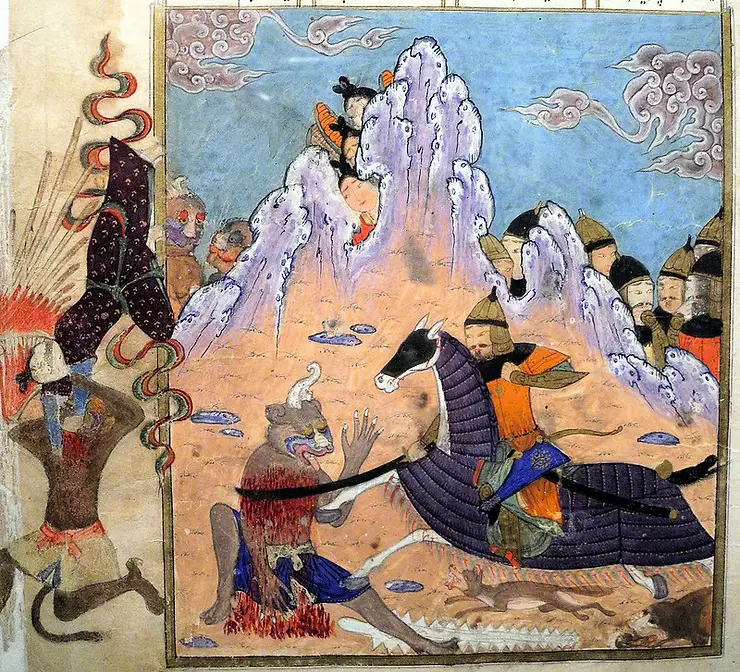
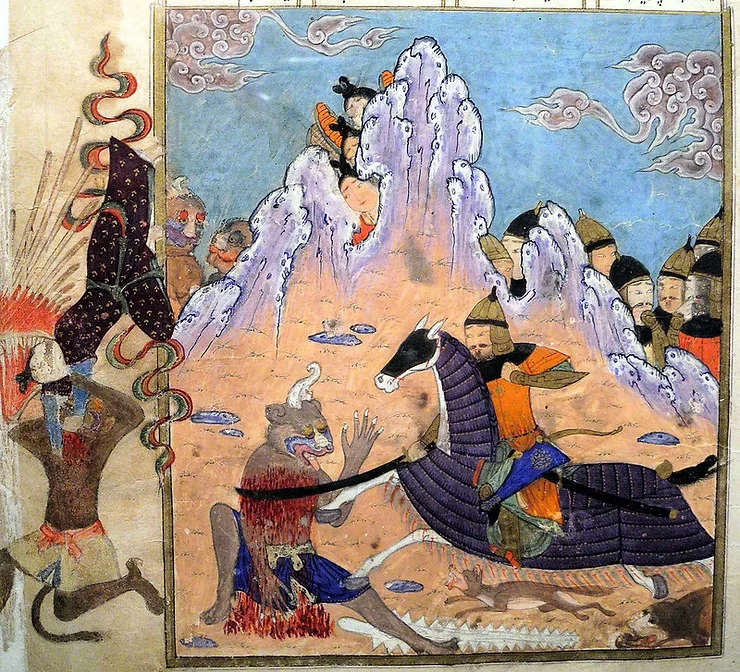
Pashtun folklore contains stories of mysterious beings believed to inhabit mountains, forests, caves, and isolated places. Some are described as dangerous demons, while others are spirits or fairy like creatures that can either help or harm humans. These stories vary between regions and are often passed down through family traditions and local storytellers. Many of these beings have different names and descriptions depending on the area, making them an interesting part of Pashtun oral heritage.
Creatures in Pashtun Folklore.
Ghoul.
Khapasa.
Sarekhawram.
Shishak.
Dev.
Shapirai.
Marduzmai.
Tor Div.
Ghoul.
A ghoul is a creature found in old Middle Eastern and South Asian folklore. Stories about ghouls have also been passed down in some Pashtun communities. They are usually associated with graveyards, abandoned places, deserts, and lonely roads. In traditional stories, ghouls are dangerous beings that people fear encountering, especially when travelling alone at night.
Ghouls are described as ugly, frightening creatures with sharp teeth, long claws, and unusual features. Some people describe them as beast like creatures, while other stories portray them as human-like beings that can disguise themselves as ordinary people or animals. This ability to deceive people is one of the common features found in many ghoul stories.
According to folklore, ghouls trick travellers, frighten people, and sometimes lead them away from familiar paths. Some stories describe them as creatures that feed on human flesh or corpses, which is why they are often associated with graveyards. These beliefs differ between cultures, but ghouls generally appear in stories as dangerous beings used to explain frightening encounters and warn people about wandering alone in isolated places.
Khapasa.
In Pashtun folklore, the Khapasa (خپسه) is a feared night spirit linked to sleep paralysis. Passed down through rural stories across Afghanistan and Pakhtunkhwa, this belief helps people make sense of the sudden fright and heavy feeling of waking up unable to move. Instead of viewing it as a normal dream, traditional Lores treat an encounter with the Khapasa as a very real, scary visitor that comes in the dark to pin a person down.
The Khapasa is usually pictured as a dark, shadowy figure or an extremely heavy, witch like spirit. Some villagers describe it as a small, withered creature, while others see it as a formless black shadow that presses down on the bed. It rarely has a clear face, people mostly notice its menacing shape, dark coloring, and sharp claws. The most distinct feature is its crushing weight, which makes the victim feel as though a massive boulder is sitting right on their chest.
The main habit of the Khapasa is to attack sleeping people during the night by jumping onto their chest and holding them in place. This attack leaves the person fully awake inside their mind, but completely unable to breathe easily, speak, or move their limbs. Traditional stories say it likes to target people who sleep flat on their backs or are extremely tired. To keep the creature away, villagers often place an iron knife under the pillow, avoid sleeping on their back, or recite protective prayers before going to sleep.
Sarekhawram.
In Pashtun folklore, the Sarekhawram (سرخوړم, literally meaning "head-eater") is a feared demonic entity associated with sudden disappearances, dark omens, and deadly night encounters. Passed down through rural oral traditions across tribal areas in Afghanistan and Pakhtunkhwa, the belief in this creature was often used by villagers to explain livestock killings, missing travelers, and mysterious deaths in isolated places. The name itself comes from the Pashto phrase for an eater or devourer of heads, reflecting its reputation in local stories as a ruthless monster that preys specifically on human victims.
The Sarekhawram is typically described as a large, wild creature with a terrifying and monstrous face. Stories often portray it as having a oversized head, sharp, dangerous teeth, and dark, shaggy fur that allows it to easily hide in the shadows of mountains or dense forests. Some rural tales describe it as taking the form of a distorted, oversized beast or a ghoulish demon with glowing eyes that stalk victims in the dark. Rather than a phantom or ghost, villagers usually picture it as a physical creature with immense strength and sharp claws.
The main habit of the Sarekhawram is to stalk lonely paths, dark mountain passes, and dense woods during the night to ambush unsuspecting people. Local stories say that it waits for travelers who venture out alone after sunset, leaping from hidden spots to overpower them. In village tradition, parents would mention the creature to keep children from wandering far from home or staying out past dark. To protect against the Sarekhawram, villagers relied on traveling in groups, carrying defensive weapons or torches, and avoiding desolate areas where the creature was believed to hunt.
Shishak
In Pashtun folklore, the Shishak (شیشک, also pronounced Shishaka or Shishek) is a feared night demon or hag like spirit deeply embedded in rural oral traditions across Afghanistan and Pakhtunkhwa. Passed down through generations in village communities, stories of the Shishak serve as a cautionary legend about the hidden dangers of the night. Local beliefs describe it as an evil female entity or spirit that thrives in dark, deserted places, preying on lonely travelers and vulnerable individuals after nightfall. Rather than a modern fictional creature, rural accounts treat the Shishak as an ancient, supernatural presence that lurks on the edges of settlements.
The Shishak is typically pictured as a hideous, withered woman or witch like demon with unnaturally sharp feature details and a sinister appearance. Traditional descriptions often give it dark, matted hair, elongated fingernails or claws, and glowing eyes that cut through the darkness. In some regional stories, it can alter its form or appear as a veiled female figure to trick unsuspecting travelers into approaching it before revealing its terrifying, monstrous face. Its distinct look combines human like traits with grotesque, predatory features that make it instantly recognizable in local stories.
The main habit of the Shishak is to stalk dark mountain paths, lonely roads, abandoned buildings, and riverbanks during late hours to ambush unsuspecting victims. Traditional stories say it uses haunting calls, cries, or deceptive disguises to lure travelers away from safe paths into isolated spots where it can attack them. In village culture, parents often mention the Shishak to deter children and young adults from wandering outside after sunset or traveling alone in the dark. To guard against the creature, villagers travel in groups, carrying fire or metal objects, and reciting protective prayers when passing through secluded areas.
Dev/Dew
In Pashtun folklore, the Dev (دېو, also spelled Deew or Daiw) is a powerful, giant like demon deeply rooted in traditional oral stories (kessai) across Afghanistan and Pakhtunkhwa. Derived from ancient regional legends and reinforced by fairy tales passed down in village gatherings, the Dev represents brute strength, greed, and elemental danger. In traditional stories, these beings are not merely mindless monsters, but ancient creatures that inhabit remote mountains, underground caves, or grand ruined castles far from human civilization. They are often featured in classic folk tales as formidable opponents that brave heroes, princes, or wise villagers must outwit or defeat.
The Dev is typically described as a monstrous giant of immense height and strength, far larger than any human. Traditional accounts depict it with dark or rough skin, wild matted hair, large sharp tusks or teeth, and heavy, boulder like limbs. In many Pashtun regional tales, a Dev may have unique physical traits, such as a single large eye in the middle of its forehead, multiple heads, or horns growing from its brow. Despite its intimidating size and physical power, it is usually pictured as somewhat slow moving and clumsy, wearing simple robes or animal pelts.
The primary behavior of the Dev revolves around guarding hidden treasures, controlling vital water sources like springs, or holding captives in its mountain lair. In traditional stories, a Dev often terrorizes nearby villages by demanding livestock, food, or tributes, using its huge strength to crush obstacles and intimidate people. Because a Dev is physically superior to humans but often foolish or quick to anger, heroes in Pashtun tales rarely beat it through strength alone instead, they use clever tricks, riddles, or holy prayers to defeat the giant. Traditional beliefs warn villagers against wandering deep into unexplored caves or high mountain passes where a sleeping Dev might be disturbed.
Shapirai
In Pashtun folklore, the Shapirai (ښاپېرۍ, plural Shapêrey, often spelled Shaperai or Shaperi) is a beautiful fairy like supernatural being deeply embedded in Afghan and Pashtun oral tradition (kessai). Originating from ancient regional myths surrounding nature spirits, the Shapirai holds a prominent place in classic folk tales, poetry, and bedtime stories passed down in rural villages. Unlike dark monsters or malevolent demons, the Shapirai is generally understood as a gentle, enchanting creature associated with untouched nature, wild mountain meadows, and clear freshwater springs. In traditional culture, the term is also frequently used in Pashto literature and everyday speech as a metaphor for extraordinary grace and beauty.
The Shapirai is described as a stunningly beautiful female figure with radiant skin, long flowing dark hair, and elegant, shimmering clothing. In local stories, these beings possess fine, delicate wings that allow them to glide effortlessly through the air, although they can also walk among humans in physical form. They are often depicted wearing light, flowing garments decorated with jewels, wild flowers, or silk, giving off a soft glow in the moonlight. While their natural form is human like and exceptionally graceful, traditional beliefs state that a Shapirai can transform into a white dove, a swan, or a light breeze to move unseen across the wilderness.
The main habit of the Shapirai is to dwell in high, secluded mountain valleys, deep forests, and around sparkling mountain lakes far away from human noise. They are believed to gather at night to dance, sing melodious songs, and bathe in mountain streams. While usually peaceful and distant, a Shapirai occasionally interacts with mortals sometimes falling in love with a brave, pure hearted young hunter or helping a lost traveler find their way out of the mountains. However, traditional stories warn that disturbing a Shapirai while she bathes or stealing her magical clothing can bind her to the human world or bring misfortune, as these creatures value their freedom and wild homes above all else.
Marduzmai
In Pashtun folklore, the Mardoomzumi (مرد زُمی, also spelled Marduzmai) is a feared shapeshifting creature deeply rooted in rural oral traditions across local villages. Passed down through family stories and community encounters, the belief in this entity centers on night spirits that blend seamlessly into everyday life to unsettling effect. The name itself reflects its connection to human like forms, though traditional Lores treat it as a deceptive supernatural presence rather than an ordinary person or animal. Rather than appearing as a fixed monster, it is understood through local stories as a fluid threat that relies on disguise and sudden physical transformation to terrify those who cross its path after dark.
The Mardoomzumi is best known for its ability to take on the appearance of an ordinary human or familiar farm animal, such as a sheep, goat, donkey, cow, or camel. At first glance, it looks identical to a normal creature, but a closer look usually reveals something deeply strange or unsettling about its body. A key trait in traditional reports is that even when it assumes a human form, its footprints match those of an animal rather than a person. In other instances, it can alter its proportions dramatically, growing into an unnaturally huge figure, one local family account recalls a witness encountering a gigantic man sitting astride a village wall, possessing unnaturally massive feature details that left the onlooker so terrified that he fainted and remained shaken for months.
The main habit of the Mardoomzumi is to roam rural areas, roadsides, and village edges late at night, catching lone travelers or late night wanderers off guard. It interacts with people primarily through trickery appearing as a peaceful, familiar animal or stranger until a person comes close enough to notice its abnormal traits or sudden growth. In Pashtun folk traditions, specific warding methods are passed down to defend against the creature; notably, local belief holds that firmly grabbing or holding onto the drawstring of one's pratug (پرتوګ ګاښ) can scare the creature away and protect the person from harm.
Tor Div
In Pashtun folklore the Tor Dev literally meaning Black Demon or Black Giant is one of the most powerful and feared giants in traditional oral stories. Passed down through generations in village culture the Tor Dev is understood as an ancient spirit that represents darkness destruction and raw physical danger. In classic folk tales the Tor Dev is often portrayed as a cruel ruler of dark lands deep caves or isolated mountain towers who holds captives and opposes human travelers.
The Tor Dev is described as a towering monstrous giant covered in pitch black skin or dark hair. Its most striking feature is its shadow like color which helps it hide in deep nights or dark underground caves. Stories describe it as having a wide head glowing red eyes that shine like burning coals and sharp teeth sticking out from its jaws. Its huge size gives it the strength to break heavy objects and it is often said to wear iron chains or animal skins.
The main habit of the Tor Dev is to guard hidden treasures and keep captives locked away in hard to reach mountain peaks. It is believed to appear in dark mountain passes and stormy wildernesses during the night to attack lonely travelers. In traditional tales the Tor Dev is hard to beat with normal strength because its life force is often hidden in a secret object like a bird or a glass jar so heroes have to use clever tricks and courage to defeat it.
سرچینې
- Tor dev.
Tor dev, the black demon.
کومه تېروتنه یا ورکه سرچینه مو لیدلې؟ موږ تېروتنې څنګه سمې کوو