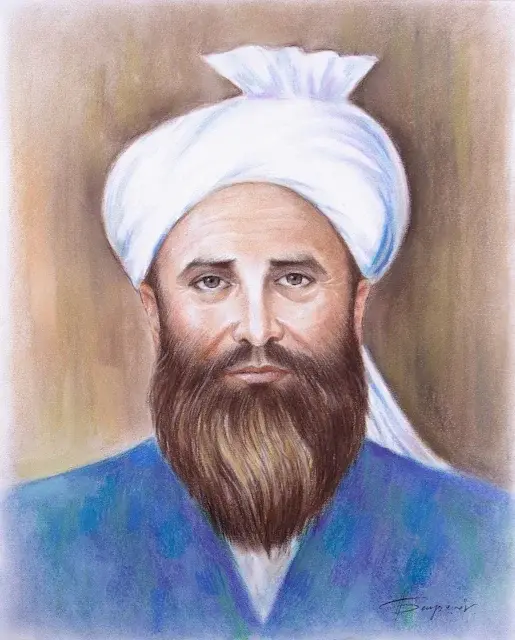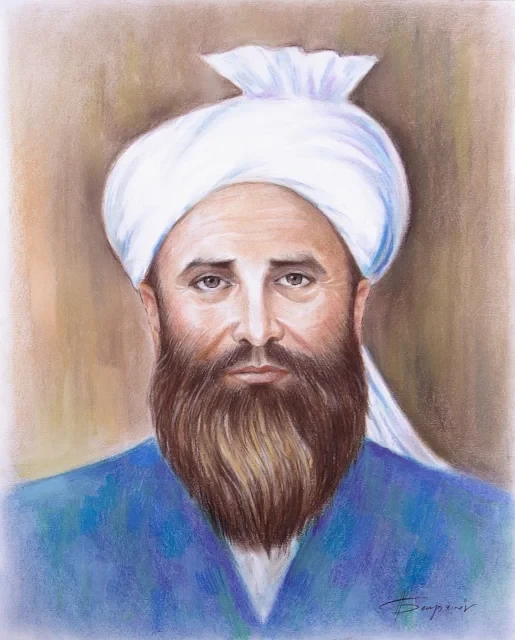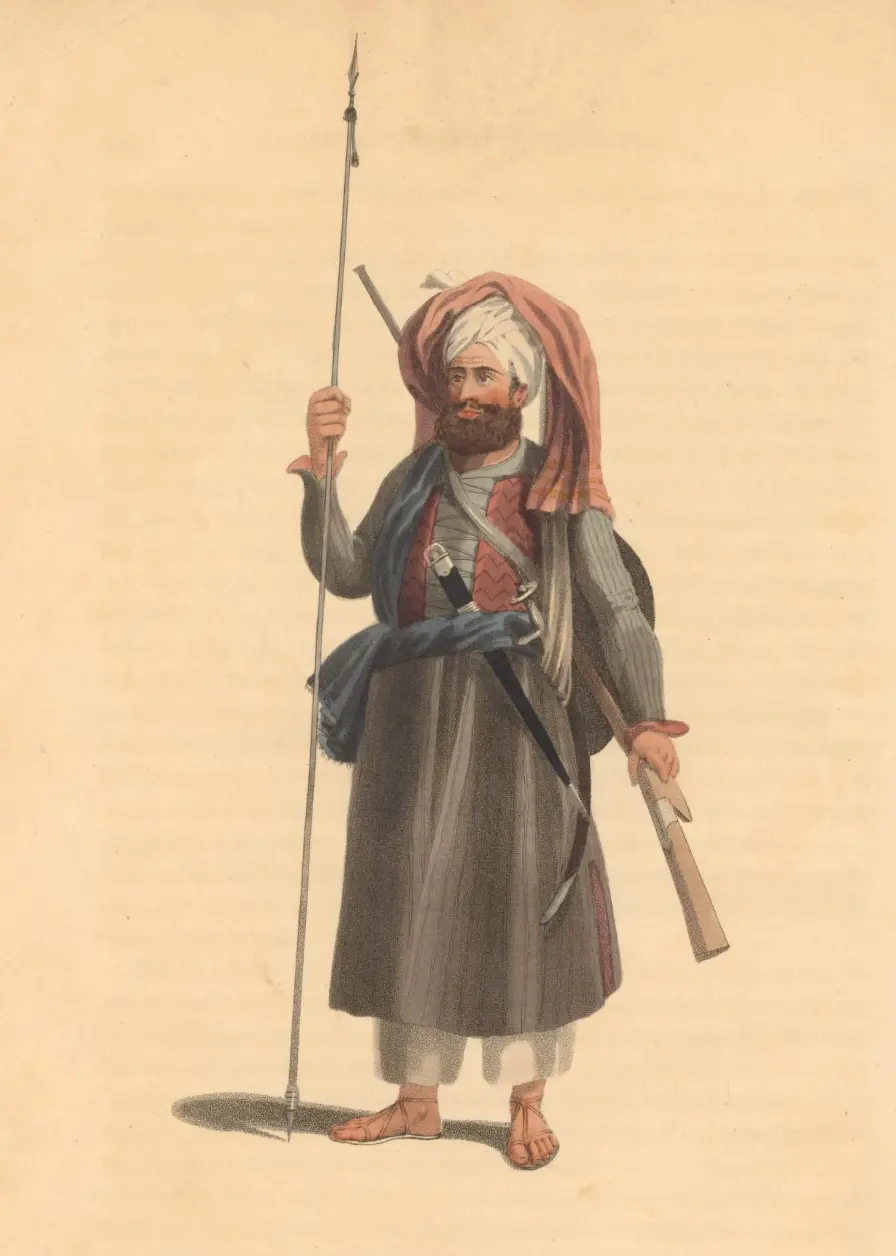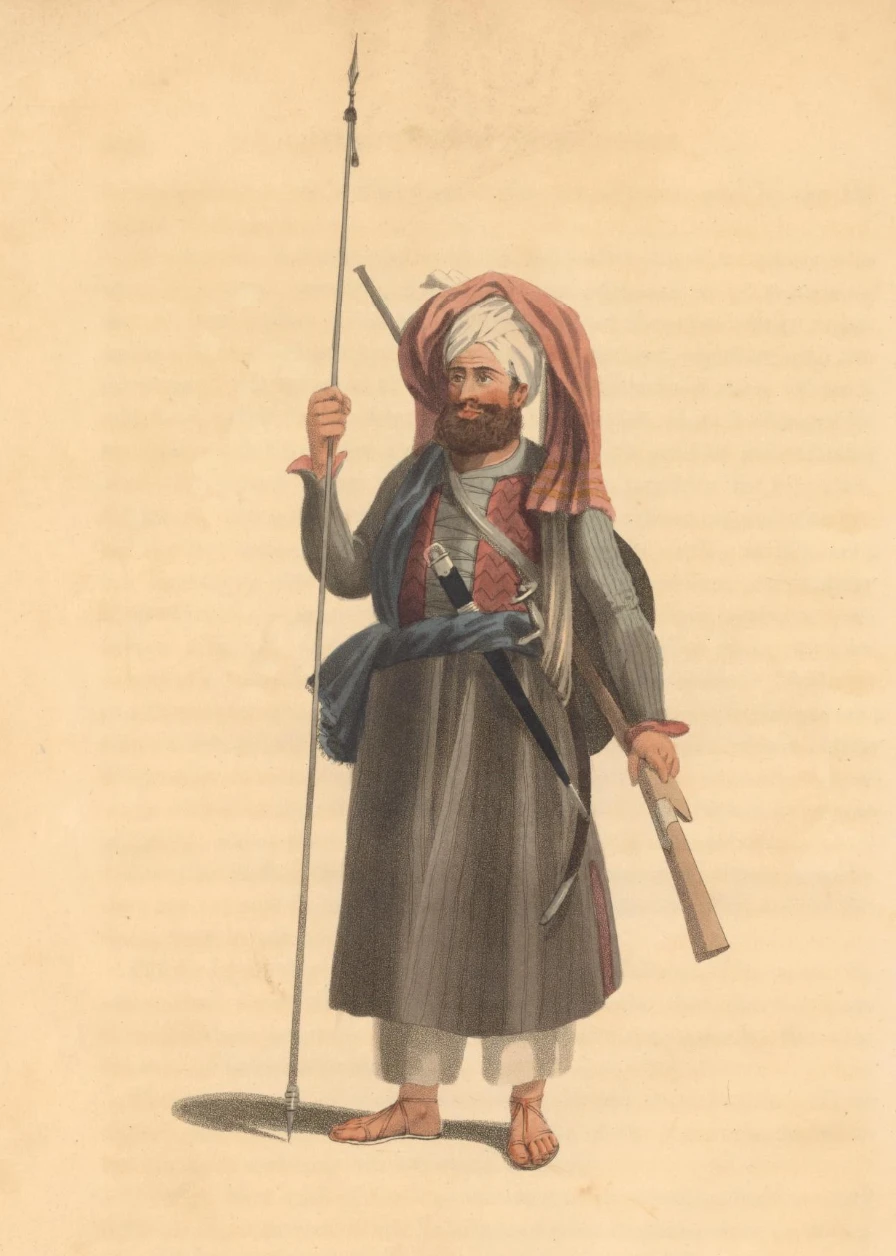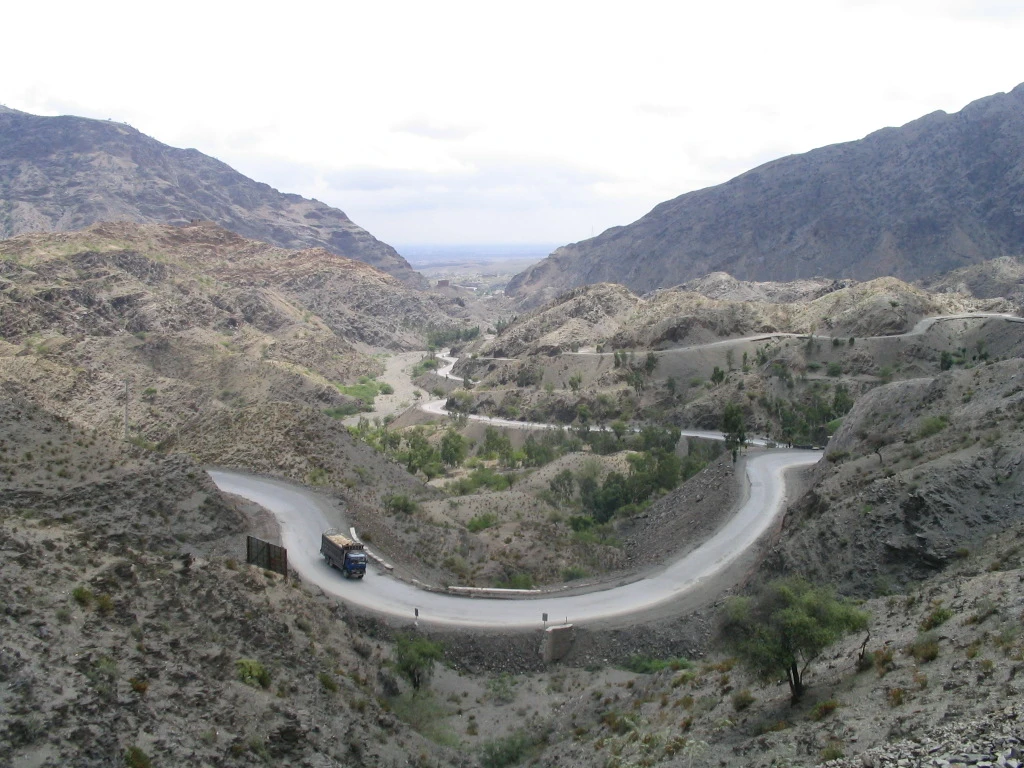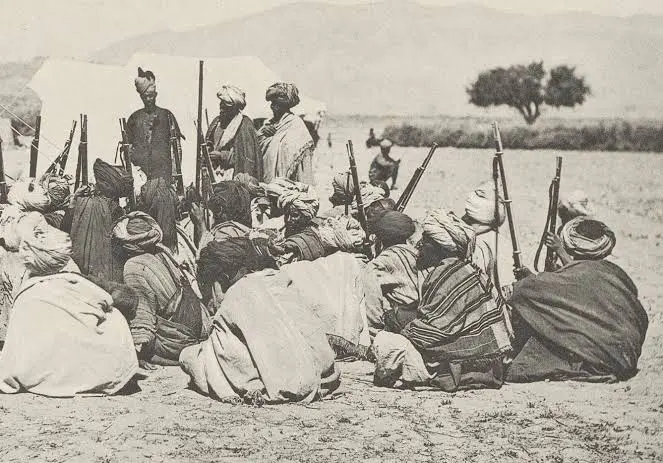
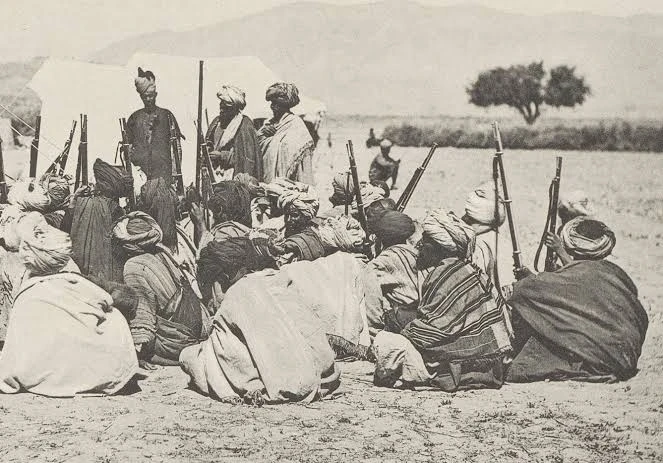
The Orakzai (اورکزي) are a Pashtun tribe whose traditional homeland lies in the mountainous country of Tirah, particularly the valleys northwest of Kohat in present-day Khyber Pakhtunkhwa. For centuries, the Orakzai have inhabited a strategically important region between Kohat, the Afridi country and the mountains approaching the Safed Koh.
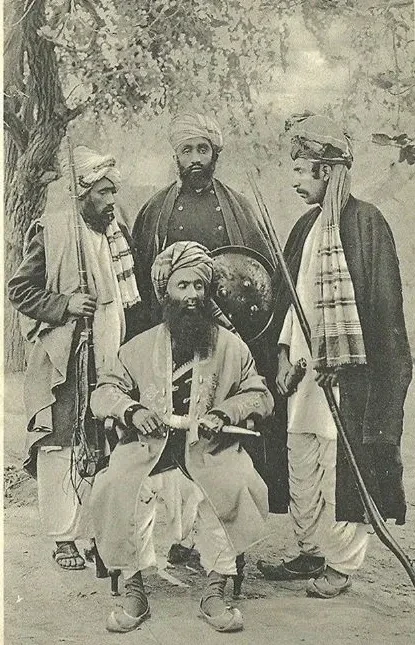
Wylly, writing in 1912, put the tribe's country at about sixty miles long and twenty broad, bounded by the Shinwaris and Afridis on the north, the Bangash and Afridis on the east, the Bangash and Zaimukhts on the south, and the Kharmana river and the Chamkanni country on the west. Orakzai Tirah has four main valleys: the Khanki, the Mastura, the Kharmana and the Bara. [2] The 1911 Encyclopaedia Britannica adds that the Orakzai farmed the Khanki and Kharmana valleys in winter and moved up to the heights of Tirah, the Mastura valley, in the hot months. [4]
Name and origin traditions
According to legends by the Orakzai elders, Tirah was formerly occupied by the Hindu non-Pashtun race, called the Tirahis whose descendants are, to this day, found in some villages as 'Hamsaya' (dependents) of the Orakzai. Tirahis were ruled by different rajas whose names can still be traced in several places in Tirah such as the Rajgal valley, Darbar Ghundi and Moula Ghar, named after King Rajgal, Raja Darbar and Raja Moula respectively. [3] The Imperial Gazetteer of 1908 calls the Tirahis "probably a Tajik race" and says they were driven out by Bayazid Ansari, the Pir Roshan, a remnant fleeing to Nangarhar. [5]
The tribe's own tradition, recorded by Rose, traces it to a Persian prince, Sikandar Shah, who was exiled from his father's kingdom; wrukzai is glossed as "lost or exiled". He took service with the Muslim king of Kohat, conquered the Tirahis, and fought Banga, a Dum (musician) of the Persian court who had married another of the king's daughters. The descendants of the two men fought until the plains were allotted to Banga's descendants, the Bangash, and the hills to the Orakzai. [1] Wylly records the same battle as a three-day fight at Muhammadzai near Kohat at the end of the sixteenth century, ended, in the story, by a figure in white crying "the plains for the Bangash and the hills for the Orakzai". He also gives a second tradition, of three brothers, Pridi, Wazir and Warak, who quarrelled and parted. [2] The 1911 Britannica translates the name as "lost tribes". [4]
The Afghan genealogies place the Orakzai among the Karlanri tribes. Raverty gives their descent from Kodaey, son of Karlarnaey, and insists they are a tribe distinct from the Afridis. [6] Rose notes that several Orakzai sections are not Orakzai by descent: the Ali Khel and Mishti are said to be of Yusufzai origin, the Malla Khel of Ghilzai origin, and the Sheikhan came from Gardez. [1]
Clans
Wylly lists six Orakzai clans, a seventh being practically extinct, and four hamsaya (dependent) clans: [2]
Ismailzai, Sunni, about 1,800 fighting men, on the Khanki river and the northern slopes of the Samana; one of its divisions, the Rabia Khel, was noted for fair hair and blue eyes.
Lashkarzai, Sunni, about 5,800 fighting men, in two feuding divisions, the Alisherzai and the Mamuzai; the Mamuzai held the head of the Khanki valley, with Khanki Bazar as their trading centre.
Massuzai, Sunni, about 2,000 fighting men, in the Kharmana valley.
Daulatzai, Sunni, about 1,600 fighting men, made up of the Firoz Khel, the Bizoti and the Utman Khel of the Mastura valley.
Muhammad Khel, Shia, about 2,500 fighting men, in the centre of the Mastura valley.
Sturi Khel or Alizai, split into Tirah and Bara Sturi Khel, half Shia and half Sunni, with about 500 fighting men.
Hamsaya clans: the Ali Khel, the Malla Khel, the Mishti and the Sheikhan.
The Imperial Gazetteer of 1908 lists the subdivisions with different strengths, among them Lashkarzai 6,500, Masozai 4,500, Daulatzai 2,000 and Ismailzai 2,000. [5]
Sunni and Shia Orakzai
Rose considered religion the most important principle in the tribe's organisation. The Shia Muhammad Khel stood apart from the rest, so that the Orakzai fell into two groups, Shia and Sunni, and sectarian differences went on splitting clans into new sections. [1] Wylly linked this to the old frontier factions: part of the tribe was Samil and Sunni, part Gar and Shia, and their internal feuds were frequent. [2] Raverty notes that the Orakzai and Afridis had once followed Bayazid Ansari, and quotes Khushal Khan Khattak saying of the Orakzai that "they are altogether from orthodoxy astray". [6]
Conflict with the Mughals
The Imperial Gazetteer describes the Mughal campaigns in Tirah against the Roshaniyya and the Orakzai: [5]
In 1619 or 1620, Mahabat Khan, Subahdar of Kabul, under the emperor Jahangir, treacherously massacred 300 Daulatzai Orakzai, who were Roshania converts; and, during his absence on a visit to Jahangir at Rohtas, Ghairat Khan was sent with a large force via Kohat to invade Tirah. He advanced to the foot of the Sampagha pass, which was held by the Roshanias under Ihdad and the Daulatzai under Malik Tor. The Rajputs attacked the former and the latter were assailed by Ghairat Khan's own troops, but the Mughal forces were repulsed with great loss. Six years later, however, Muzaffar Khan, son of Khwaja Abdul Hasan, then Subahdar of Kabul, marched against Ihdad by the Sugawand pass and Gardez, and after five or six months' fighting Ihdad was shot and his head sent to Jahangir. His followers then took refuge in the Lowaghar; and subsequently Abdul Kadir, Ihdad's son, and his widow Alai, returned to Tirah. The death of Jahangir in 1627 was the signal for a general rising of the Afghans against the Mughal domination. Muzaffar Khan was attacked on his way from Peshawar to Kabul, and severely handled by the Orakzai and Afridis, while Abdul Kadir attacked Peshawar, plundered the city, and invested the citadel. Abdul Kadir was, however, compelled by the jealousy of the Afghans to abandon the siege and retire to Tirah, whence he was induced to come into Peshawar. There he died in 1635. The Mughals sent a fresh expedition against his followers in Tirah; and Yusuf, the Afridi, and Asar Mir, the Orakzai chief, were at length induced to submit, and received lands at Panipat near Delhi. Simultaneously operations were undertaken in Kurram. Yet, in spite of these measures, Mir Yakut, the imperial Diwan at Peshawar, was sent to Tirah in 1658 to repress an Orakzai and Afridi revolt.
Wylly credits the Khan of one section of the Muhammad Khel with leading the Orakzai lashkar that beat Ghairat Khan at the Sampagha pass, though he dates the battle to 1587. [2]
Orakzai notables in India: Dost Muhammad Khan and Jalal Khan
Dost Muhammad Khan, born in 1672 AD, was the son of Nur Muhammad Khan, and belonged to Mirazi Khel clan of Orakzais of Tirah. He emigrated to Hindustan, somewhere between 1697 and 1703, during the final years of Emperor Aurangzeb Alamgir. He founded the Bhopal principality in 1707 and expanded it till his death in 1728. At its zenith, the Bhopal state comprised a territory of around 7,000 square miles (18,000 km2). The state became a British protectorate in 1818 and was ruled by the descendants of Dost Mohammad Khan till 1949, when it was merged with the Dominion of India. [3] Wylly, writing while the dynasty still ruled, records the tradition that the reigning family of Bhopal descended from the Firoz Khel division of the Daulatzai. [2]
Jalal Khan's father, Hazar Mir Orakzai of Miranzai Khel, came to India during the reign of Emperor Shah Jahan and obtained the zamindari of certain villages in the Jamuna-Gangetic Doab. After his father's death, Jalal Khan succeeded to the zamindari and obtained, in addition thereto, some more villages in the pargana of Thana Bhawan, near which he built a fortress and founded the town of Jalalabad (Saharanpur, U.P). In 1709 Jalal Khan faced seventy or eighty thousand Sikhs of Banda Singh and successfully defended his fort with just few hundred men. For the victory over the Sikhs, Jalal Khan was rewarded by the Nazim of Delhi, on 31st August 1710 AD, with the Faujdari of Saharanpur. He was raised to the rank of two thousand and five hundred in the reign of Jahandar Shah, with a further promotion during Farrukh Siyar's time. He died in September 1718 AD. [3]
Orakzais during the Durrani period
Since the decay of the Mughal empire, Orakzai tribes had been virtually independent, though owning at times a nominal allegiance to Kabul. [5] Syed Ghulam Muhammad in Timur Shah's reign, has following description of Orakzais:
"The Afghan tribe (Orakzai) contains some thousands of families, and they dwell in mountain tracts of Tirah, the Khyber, and Jalalabad. They have to furnish a contingent of soldiers to the Badshah of Kabul, and their Sardars hold jagirs or fiefs in the Peshawar district for guarding and keeping open the passes within their boundaries." [6]
Raverty adds that in Akbar's reign the Orakzai were counted in the toman of Kohat and reckoned able to furnish 300 horsemen and 5,000 foot. [6]
During the Durrani period, the titular chief of the Orakzai belonged to the Abdul Aziz Khel clan. He had very cordial relations with the Saddozai Kings at Kabul. The Abdul Aziz Khel 'Khan Khels' had a 'sanad' from Ahmad Shah Abdali, granting them a 'jagir' and some monetary allowances. In 1796-7 AD, Orakzais provided an infantry contingent of ten thousand men to Zaman Shah for his invasion of the Punjab. The Durranis, from the very beginning, managed the Orakzai tribe through the Bangash 'Khans' of Hangu. During the Barakzai and Sikh domination of the area, the Orakzai were under the management of Sultan Muhammad Khan Barakzai, the governor of Kohat. [3]
The British period and the Samana
Wylly says the Orakzai gave the British no serious trouble until the spring of 1855, when many of them joined attacks on posts in the Miranzai valley; on 30 April that year a force of 1,500 to 2,000 Orakzai, Afridis and Zaimukhts attacked a British camp. A punitive expedition against the Rabia Khel followed in September 1855, operations against the Bizoti in 1868 and a raid across the Ublan pass in 1869. [2] The 1911 Britannica lists British expeditions in 1855, 1868, 1869, 1891 and 1897. [4]
In 1891 Sir William Lockhart led two Miranzai expeditions. The building of British posts on the Samana range, which overlooks the Khanki valley, was one cause of the fighting, and the second expedition ended with the clans accepting the British occupation of the Samana. [2] In early 1892 an Orakzai deputation asked the Amir of Afghanistan to help get the British off the range, and he declined. [2]
In the frontier rising of 1897 the Orakzai attacked the Samana forts. On 12 September a combined Orakzai and Afridi force took the signalling post of Saragarhi, held by twenty-one men of the 36th Sikhs, who were killed to a man; the attackers admitted to 180 dead there. Gulistan (Fort Cavagnari), under Major Des Voeux, held out until Major-General Yeatman-Biggs relieved it on 14 September. [2] The Imperial Gazetteer says the attacks on the Samana and the Khyber led to the Tirah expedition of 34,500 men under Sir William Lockhart, who stormed the heights of Dargai and crossed the Sampagha and Arhanga passes into Maidan, the first British force to enter Tirah. [5]
Orakzai District today
The Orakzai country was administered as part of the Frontier Region of Kohat until 1973. The President of Pakistan announced the creation of Orakzai Agency on 3 November 1973 and it was inaugurated on 1 December 1973. A headquarters was built at Kalaya in 1975 but never occupied; the agency was later run from a headquarters on the Kohat–Thall road near Hangu, built in 1989. GlobalSecurity gives the agency an area of 1,538 square kilometres, with Ghiljo, Daboori, Kalaya, Mishti Mela and Kurez as its main towns. [7] After the Federally Administered Tribal Areas were merged into Khyber Pakhtunkhwa in 2018, the agency became Orakzai District in Kohat Division, with Ghiljo Bazar as headquarters of Upper Orakzai and Kalaya of Lower Orakzai. [8]
Media and recordings
Where this tribe sits
- Part of
- Kodai
- Branches beneath it
- Daulatzai (Orakzai)
- Ismailzai
- Lashkarzai
- Massozai
- Alizai (Orakzai)
Orakzai tribe profile
Where the sources disagree
The Makhzan-i Afghani lists an Ourakzye twice, under Kodai and also under Gharon in the Bitan line. The Khulasat al-Ansab, Raverty, Bellew, Longworth Dames and Caroe all use the Karlanri placement.
At a glance
- Population
- about 30,000 families (1891, the whole tribe, including the hamsaya clans (Bellew's estimate))6
- Countries
- Pakistan
- Where they live
- Tirah, Samana range, Mastura and Khanki valleys, Kohat border
- Language
- Pashto (Orakzai dialect)
- Religion
- Sunni Islam, with Shia sections, chiefly among the Daulatzai
- Main clans
- Daulatzai (Orakzai), Ismailzai, Lashkarzai, Massozai, Alizai (Orakzai)
- Other names
- Ourakzye, Varokzye, Wurakzi, Urakzi, Oorookzye, Orak
Homeland
- Sampagha PassPass into Tirah that Ihdad and the Daulatzai Orakzai held against the Mughals in 1620. Lockhart's army crossed it in 1897, the first British force to enter Tirah.
- SaragarhiSignalling post taken by an Orakzai and Afridi force on 12 September 1897. All 21 men of the 36th Sikhs holding it were killed.
- KohatTown below the Orakzai valleys, which lie to its north-west. The Adam Khel Afridi hold the Kohat Pass, and Bacha Khan was sentenced here to three years' hard labour in June 1948.
Notable people
Malik Torfl. 1620
Leader of the Daulatzai Orakzai who, with the Roshani leader Ihdad, held the Sampagha pass against Ghairat Khan's Mughal army in about 1620.7
Asar Mirfl. 1630s
Orakzai chief who submitted to the Mughals after Abdul Qadir's death in 1635 and was granted lands at Panipat near Delhi.7
Dost Muhammad Khanc. 1674–c. 1740
Afghan from Tirah who founded Bhopal state after 1709; Ibbetson counts the Bhopal rulers as Orakzai, while the Imperial Gazetteer calls him a Mirzai Khel Barakzai.9
Sources for the tribe profile
- Makhzan-i Afghani, tr. Dorn, Part II p. 54
- Khulasat al-Ansab, quoted in Dorn, Part II annotations p. 130
- Raverty, Notes on Afghanistan and Part of Baluchistan (1880), p. 95
- Ibbetson, in Rose's Glossary, vol. III pp. 248–249
- Ibbetson, in Rose's Glossary, vol. III p. 247 (the Pathan tribes of Kohat)
- Bellew, An Inquiry into the Ethnography of Afghanistan (1891), pp. 94–97
- Imperial Gazetteer of India: North-West Frontier Province (1908), pp. 22, 34, 169, 181, 233–236
- Caroe, The Pathans (1958), Table V and pp. 202, 229
- Imperial Gazetteer of India, vol. VIII (1908), 'Bhopal State', p. 128
- Balland, 'Bangaš', Encyclopaedia Iranica III/7 (1988), pp. 692–693
- Muhammad Zubair, "A single polity at last? Pakistan's unfinished efforts to mainstream the Federally Administered Tribal Areas", ConstitutionNet (International IDEA), 18 July 2018
Sources
- H. A. Rose (1914), A Glossary of the Tribes and Castes of the Punjab and North-West Frontier Province, Vol. III, pp. 176–177.
- H. C. Wylly (1912), From the Black Mountain to Waziristan.
- History of Pashtuns — “Notes on Orakzai tribe.”
- Encyclopædia Britannica (1911), “Orakzai.”
- Imperial Gazetteer of India, Provincial Series: North-West Frontier Province (Calcutta, 1908), pp. 234–236, "Tirah" and "Orakzai"
Source of the author's Mughal-period passage (p. 235, quoted verbatim); the Tirahis; Tirah first entered by a British force in 1897; 34,500 men under Lockhart, Dargai, Sampagha and Arhanga; table of Orakzai subdivisions and strengths (p. 236). Consulted 14 October 2026.
- H. G. Raverty, Notes on Afghanistan and Baluchistan (London, 1888), p. 95
The quoted description of the Orakzai from Ghulam Muhammad's route survey; Orakzai in the toman of Kohat under Akbar (300 horse, 5,000 foot); footnotes on the Roshaniyya, Khushal Khan Khattak's verse on the Orakzai, and descent from Kodaey son of Karlarnaey. Consulted 14 October 2026.
- GlobalSecurity.org, "Orakzai Agency"
Frontier Region Kohat until 30 November 1973; creation announced 3 November 1973 and inaugurated 1 December 1973; area 1,538 sq km; main towns; headquarters built at Kalaya in 1975 but not occupied, later headquarters on the Kohat–Thall road (1989). Consulted 14 October 2026.
- Wikipedia, "Orakzai District"
District status in Kohat Division after the 2018 merger of FATA with Khyber Pakhtunkhwa; Ghiljo Bazar (Upper Orakzai) and Kalaya (Lower Orakzai) as headquarters. Consulted 14 October 2026.
Noticed a mistake or a missing source? Here's how we correct things