
Tribe · Mangal
Muqbil
The Muqbil live on the Kurram border and in Khost. The Khulasat al-Ansab and Caroe place them under Mangholi (Mangal).
Read article16 Oct 2026
Tribe
منګل
The Mangal hold the Chamkani valley and Hariob in Paktia, towards Zurmat, and earlier lived in Bannu. The Khulasat al-Ansab counts Mangholi as a son of Kodai and the ancestor of the Muqbil and Zadran. The sources agree on the Mangal's place under Kodai.
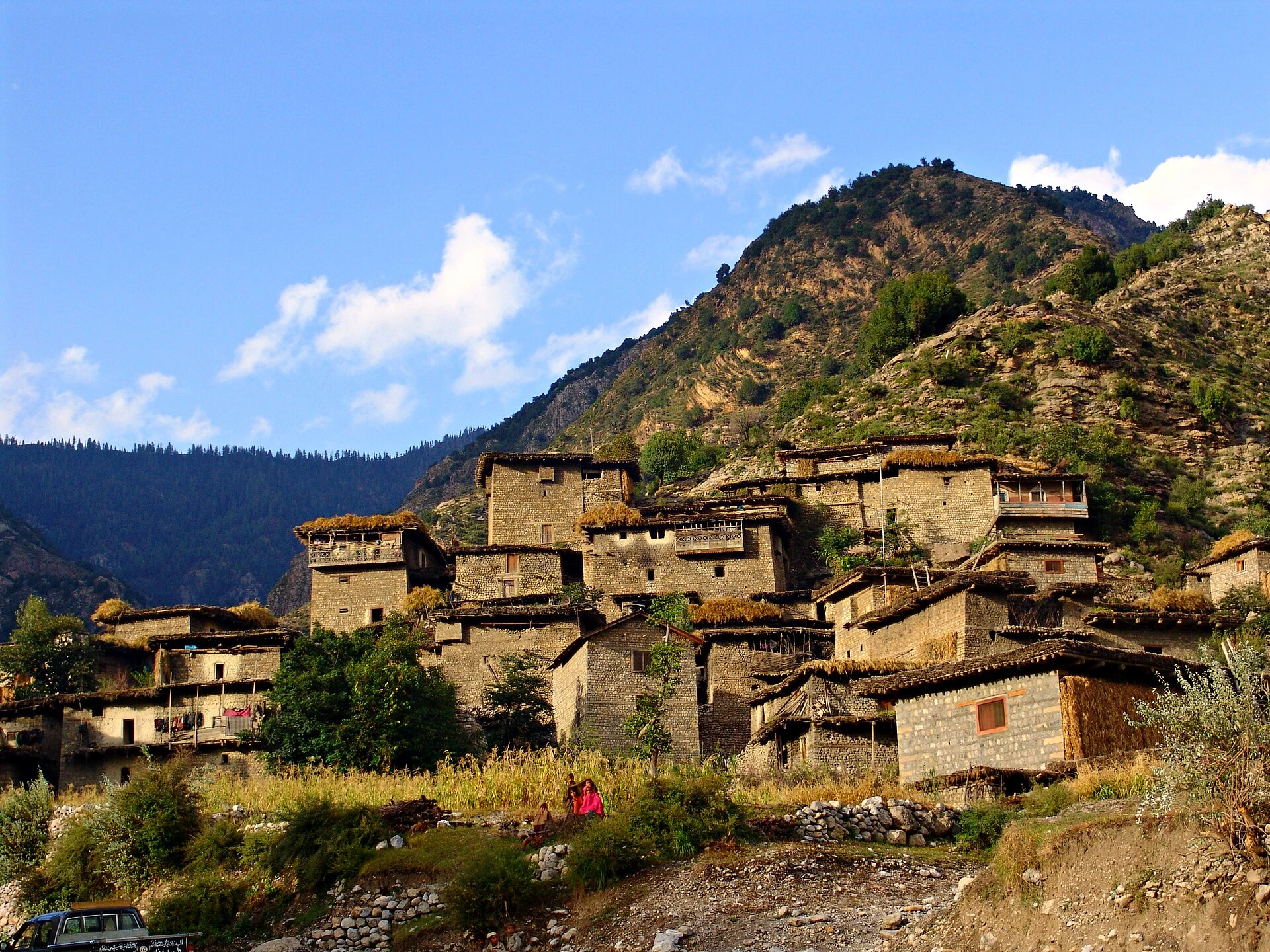
Teri (Tari) Mangal, the Mangal village in Kurram near the Afghan border, September 2006.
Abbas.Haider355 · CC BY-SA 3.0
Gallery
2 images
Goud Qala Mangal, a village of the Muqbil Mangal about 16 km north-east of Gardez, Paktia, February 2021.
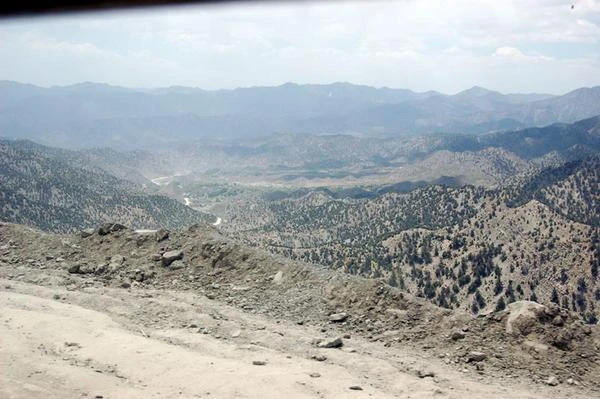
The Kurram valley seen from the Paktia side of the border, June 2005.
The Khulasat al-Ansab, quoted in Dorn's notes, makes Mangholi one of the seven sons of Kodi and the ancestor of the Mughbal (Muqbil), Zhandran (Zadran) and Bahadurzai, who all live next to Khost. Raverty (1880) gives the same three sub-tribes under the name Mangali, living to the north, west and south of Khost, and says the tribe descends from Mangalaey; he calls Mangalaey the fifth son of Karlarnaey, where the Khulasat makes him a grandson. Rose's Glossary (1914) repeats the three tribes and adds a clan called the Mangal Khel; Raverty treats the Mangal Khel of Upper Bangash, about 2,000 families, as a separate group. The sources agree on the Mangal's place under Kodai.
Raverty also suggested that the Turi, Mangal, Muqbil and Jaji of the upper Kurram descend from Turkmen who settled around Ghazni and Gardez in the twelfth century. Caroe (1958) found the theory doubtful and read the tribes' place in the Karlanri genealogy as a sign that they belong with the other hill Pathans around them.
The Mangal's own clan lists vary. Bellew (1891) gives five main clans, Miral, Khajuri, Margha, Kamal and Zao. The Intelligence Branch gazetteer gives Miran Khel, Khajuri, Gabar, Marghai and Kamal Khel, and says the chief of the Miran Khel was head of the whole tribe.1,6,5,9,2,7
Ibbetson records that the Mangal and the Hanni, an affiliated tribe of Sayyid origin, left their home in Birmal, crossed the Sulaimans and settled in the Kurram and Gambila valleys of Bannu towards the close of the thirteenth century; the Kalid-i Afghani puts the move a century and a half earlier. About a century later the Bannuchi, pushed out of the Shawal hills by the Wazirs, drove both tribes back into the mountains of Kohat and Kurram. Thorburn, writing in 1876, says the Bannuchis displaced the Mangals and Hanis about five hundred years before.
Bellew put the Mangal at 6,000 families in the Chamkani valley south of the Kurram river and in the hills west to Zurmat. They farmed and kept flocks; the gazetteer credits them with 250 forts and 500 black tents.4,10,2,7
The gazetteer records that in April 1858 Muhammad Azim collected the revenue of the Chakmani valley for the first time in twenty years, against armed opposition. The Mangal held a tower on the Peiwar Kotal and took a toll from travellers on the Kurram road. On 13 December 1878 the rearguard of General Roberts's column, crossing from Ali Khel by the Sapri pass, was attacked by Mangal tribesmen; Captain Goad was mortally wounded before they were driven back. The gazetteer adds that the Mangal recognised the Afghan governors of Khost and Hariob only in part, and that groups of them sometimes moved into British territory to escape their demands.7,6
The rising against King Amanullah in 1924 is also called the Mangal rebellion, after the first tribe to revolt. Fayz Muhammad Kateb traced it to a marriage dispute: a Mangal man claimed a woman he said had been betrothed to him in childhood, the governor rejected the claim, and the local judge, Mulla Abd Allah, protested that the Sharia had been broken and raised the tribes. The Mangal sheltered the dissenting mullahs and, according to Sana Haroon's reading of British reports, raised a lashkar of 6,000 that attacked army posts. Zadran, Sulaiman Khel and other Ghilzai tribes joined, and the rebels proclaimed Abdul Karim, a son of Amir Yaqub Khan, as amir.
Government troops and tribal levies pushed the rebels back by November 1924, and the leaders were executed in Kabul on 25 May 1925. The German traveller Trinkler reported that 1,575 Mangal men were executed, 600 women taken to Kabul and 3,000 houses burnt in reprisals; these figures come from one observer. Ruttig's 2024 study places the Mangal today in the Musa Khel and Qalandar districts of Khost and in Lazha Mangal, Chamkani, Jani Khel, Mirzaka and Dand-e Patan in Paktia, with a small settlement at Teri Mangal in Kurram.8
Tribe · Mangal
The Muqbil live on the Kurram border and in Khost. The Khulasat al-Ansab and Caroe place them under Mangholi (Mangal).
Tribe · Mangal
The Zadran (Jadran) live on the eastern slopes of the Sulaimans east of Zurmat, between Paktia and Khost. The Khulasat al-Ansab and Caroe trace them through Mangholi, son of Kodai.
The genealogy follows the Makhzan-i Afghani and the Khulasat al-Ansab, as Caroe tabulates them. It records tradition: where sources place a tribe differently, the note above says so.