تاریخ
History
Ahmad Shah and the founding of the Durrani state
An introduction to the Pashtun-led state founded in 1747, its expansion, and the limits of describing an eighteenth-century empire with modern borders.
Published 7 October 20262 sources

On this page
A turning point in 1747
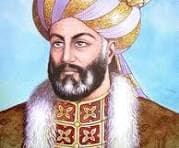
Ahmad Shah emerged as a ruler after Nadir Shah died in 1747. Abdali chiefs gathered near Kandahar and selected him as their leader. He belonged to the Sadozai lineage of the Popalzai. His accession began the Durrani dynasty, a major turning point in the political history of Pashtuns and Afghanistan. [2]
Expansion and alliances
Ahmad Shah adopted the title Durr-i-Durrani, and the Abdali became known as Durrani. His rule expanded through campaigns and alliances across Afghanistan and into neighbouring regions. The resulting empire included communities of different languages and backgrounds; it was not simply a state containing only Pashtuns. [2]
An empire with changing boundaries
Ahmad Shah died in 1772. Rivalries among his successors and challenges in the conquered territories weakened the empire. The eighteenth-century Durrani state should not be confused with the present borders of Afghanistan or Pakistan. Its history concerns changing authority, tribal alliances, and imperial expansion rather than a fixed modern national map. [1]
Sources
- Library of Congress, Federal Research Division — Afghanistan: Country Profile (August 2008)
Historical background, especially the section on Pashtun rulers. Consulted 7 October 2026; older political and demographic data are not used here.
- Afghanistan: A Country Study — Ahmad Shah and the Durrani Empire
Online reproduction of the Library of Congress country study. Used for the 1747 succession and the Abdali/Durrani name; consulted 7 October 2026.
Spotted an error or a missing source? Read how we make corrections